Warehouse Move Nashville: How to Plan, Organize, and Execute a Successful Relocation
A warehouse move in Nashville is a complex operation that goes far beyond loading boxes onto trucks. It involves careful planning, inventory control, equipment coordination, and minimizing downtime so business operations can continue smoothly. Whether relocating within Nashville or moving to a nearby city, a warehouse move requires a strategic approach to avoid costly delays and disruptions.
This guide explains what a warehouse move involves, how businesses can prepare, common challenges to expect, and best practices used by experienced logistics and moving professionals in the Nashville area.
What Is a Warehouse Move?
A warehouse move involves relocating inventory, equipment, racking systems, machinery, and operational infrastructure from one warehouse location to another. Unlike residential moves, warehouse relocations must account for workflow efficiency, safety regulations, and operational continuity.
Warehouse moves often include:
- Palletized inventory
- Shelving and racking systems
- Forklifts and industrial equipment
- Office areas within the warehouse
- Technology systems and inventory tracking tools
Because of the scale and complexity, warehouse moves require a higher level of coordination.
Why Warehouse Moves in Nashville Require Special Planning
Nashville’s growing commercial and logistics sector means warehouse relocations are becoming more common. Businesses often move to accommodate expansion, improve distribution routes, or access better facilities.
Factors that make warehouse moves in Nashville unique include:
- High demand for industrial space
- Busy transportation corridors
- Coordination with loading docks and freight schedules
- Compliance with local regulations and safety standards
Proper planning helps businesses avoid unexpected downtime and operational setbacks.
Key Steps in Planning a Warehouse Move
Conduct a Full Inventory Assessment
Before any equipment is moved, a detailed inventory review is essential. This includes identifying what will be moved, what should be replaced, and what can be disposed of or donated.
Inventory assessments help:
- Reduce unnecessary moving costs
- Improve layout planning at the new facility
- Identify fragile or high-value items
Create a Warehouse Move Timeline
Warehouse moves should follow a structured timeline that includes:
- Pre-move planning
- Packing and labeling phases
- Equipment disassembly
- Transportation windows
- Reinstallation and setup
Most businesses plan warehouse moves weeks or months in advance to minimize disruption.
Plan the New Warehouse Layout
One common mistake during a warehouse move is failing to plan the new layout ahead of time. Racking placement, equipment positioning, and workflow paths should be mapped before moving day.
A well-planned layout improves:
- Operational efficiency
- Employee safety
- Inventory accessibility
Equipment and Inventory Handling During a Warehouse Move
Warehouse inventory often includes heavy or sensitive items that require specialized handling.
Palletized Inventory
Inventory should be shrink-wrapped, labeled clearly, and grouped by destination area within the new warehouse.
Machinery and Equipment
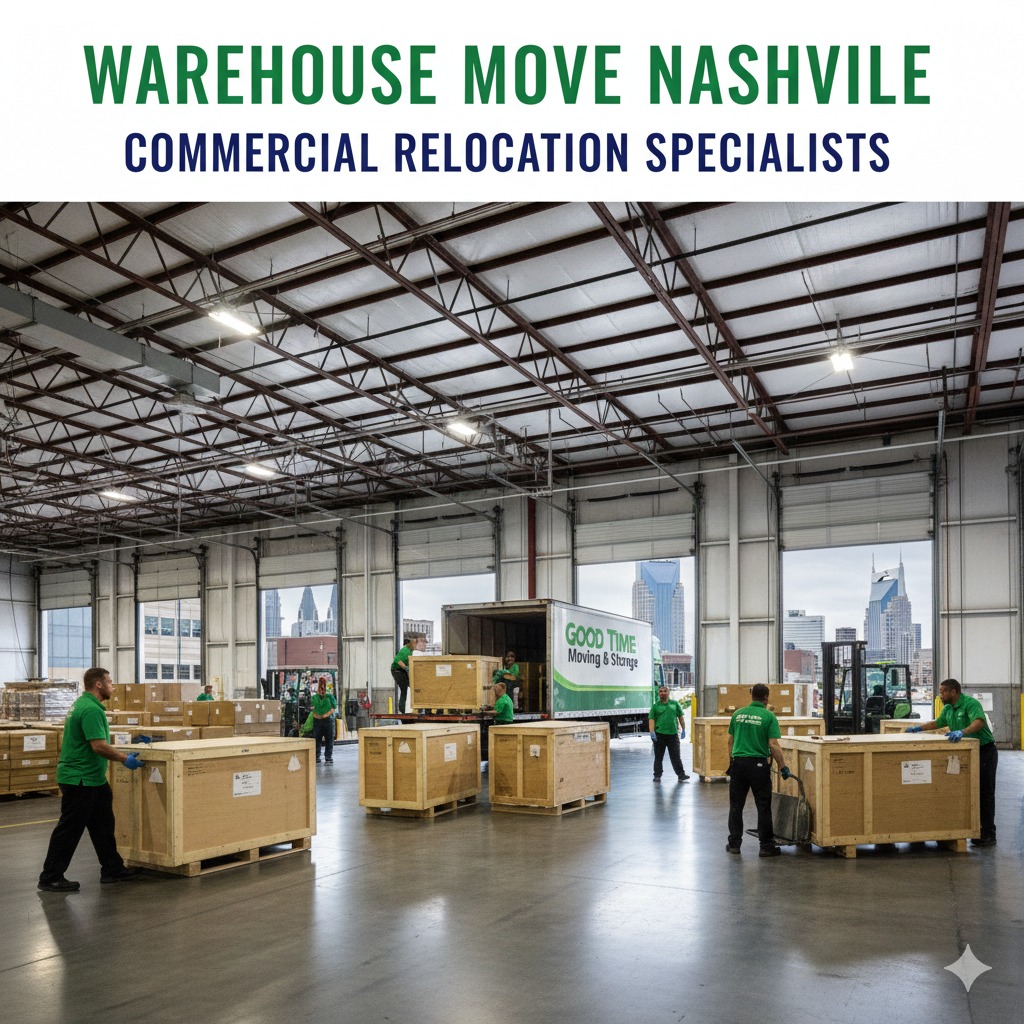
Machinery may require partial disassembly and careful handling using forklifts, pallet jacks, or cranes.
Racking Systems
Shelving and racking must be dismantled properly to avoid damage and ensure safe reinstallation.
Experienced warehouse moving teams follow strict safety protocols when handling industrial equipment.
Common Challenges During a Warehouse Move
Warehouse relocations often face challenges that residential moves do not.
Operational Downtime
Every hour of downtime can impact revenue. Careful scheduling helps keep disruptions to a minimum.
Inventory Tracking
Without proper labeling and documentation, inventory can be misplaced or delayed.
Equipment Damage
Improper handling of machinery or racking systems can lead to costly repairs.
Coordination Issues
Warehouse moves often involve multiple teams, vendors, and schedules that must align perfectly.
Understanding these challenges early helps businesses plan smarter.
Warehouse Move Nashville: Local Logistics Considerations
Nashville’s central location makes it a major logistics hub, but it also presents challenges during a warehouse move.
Important local considerations include:
- Traffic patterns around industrial zones
- Dock availability at both locations
- Permits for oversized equipment transport
- Coordination with nearby cities like Franklin, Brentwood, Murfreesboro, and Hendersonville
Local professionals familiar with the area can help navigate these logistical details efficiently.
Best Practices for a Smooth Warehouse Relocation
Experienced warehouse movers follow proven best practices to ensure success.
Key strategies include:
- Labeling inventory by zone, not just item type
- Scheduling moves during off-peak hours
- Using standardized pallets and containers
- Conducting final walkthroughs before and after the move
- Assigning move coordinators for each department
These practices reduce confusion and speed up the transition.
Warehouse Move vs Office or Commercial Move
While office moves focus on furniture and workstations, warehouse moves involve operational infrastructure.
Key differences include:
- Heavier equipment and machinery
- Higher safety risks
- Greater coordination requirements
- Longer planning timelines
This distinction is why warehouse moves require specialized experience.
DIY Warehouse Move vs Professional Warehouse Movers
Some businesses consider handling warehouse moves internally, but this approach carries risks.
DIY Warehouse Move
- Limited equipment availability
- Higher injury risk
- Longer downtime
- Increased liability
Professional Warehouse Move
- Trained crews
- Specialized equipment
- Efficient timelines
- Reduced operational disruption
Trusted service providers like Good Time Moving and Storage often assist businesses across Nashville and surrounding Tennessee cities with organized warehouse relocations, focusing on safety and efficiency rather than speed alone.
Real-Life Warehouse Move Example
A distribution company relocating from one Nashville warehouse to a larger facility in Murfreesboro planned its move over two weekends. Inventory was labeled by zone, racking was dismantled in phases, and essential operations resumed within days. Proper planning prevented lost inventory and reduced downtime significantly.
This type of phased approach is commonly recommended by experienced warehouse moving professionals.
Frequently Asked Questions
A warehouse move includes relocating inventory, equipment, racking systems, and operational infrastructure to a new facility.
Timelines vary based on size and complexity, but most warehouse moves require weeks of planning and several days for execution.
Careful scheduling, phased moves, and pre-planned layouts help reduce operational downtime.
Yes. Forklifts, pallet jacks, lift gates, and sometimes cranes are required for safe handling.
Yes. Short-term or long-term storage is often used during phased relocations.
Professional movers provide experience, safety protocols, and equipment that reduce risk and improve efficiency.
Final Thoughts
A warehouse move in Nashville is a major operational event that requires detailed planning, coordination, and execution. From inventory control to equipment handling and layout planning, every step plays a role in ensuring a successful transition.
By understanding the process and following proven best practices, businesses can relocate warehouses with minimal disruption and position themselves for long-term operational success in Nashville and surrounding Tennessee markets.