Moving Boxes and Supplies That Make Moves Easier
The fastest way to make a move harder than it needs to be is to start with the wrong boxes. A box that caves in on the stairs, tape that peels open in the truck, or a lamp packed without padding can turn a routine move into a costly one. That is why choosing the right moving boxes and supplies matters more than most people expect.
For many Tennessee households, the goal is simple: keep the move organized, protect what matters, and avoid last-minute stress. The right materials help with all three. They also save time on packing day, reduce the risk of damage, and make loading and unloading far more efficient.
Why moving boxes and supplies matter
People often focus on the truck, the timeline, and the moving crew. Those things matter, but packing materials shape the entire process. When boxes are the right size and strength, they stack better, carry better, and protect belongings better. When supplies are mismatched or low quality, problems show up fast.
A heavy-duty small box is usually a smarter choice for books than a large box that becomes too heavy to lift safely. A dish pack with extra reinforcement is worth it for kitchenware, while wardrobe boxes can save hours when you need to move closets quickly without wrinkling everything inside. Not every item needs premium packing, but some absolutely do.
There is also a cost trade-off. Buying the cheapest materials may seem practical at first, but replacing broken items, repacking split boxes, or slowing down the move can cost more than spending a little extra on dependable supplies from the start.
The core boxes most moves need
A well-packed move usually starts with a mix of box sizes, not one size used for everything. Small boxes are best for dense, heavy items like books, canned goods, tools, and files. Medium boxes work well for toys, pantry items, decor, shoes, and folded clothes. Large boxes are useful for lightweight but bulky items such as bedding, pillows, and lampshades.
Specialty boxes come into play when protection and speed matter. Wardrobe boxes let you move hanging clothes directly from closet rod to box. Dish boxes are built for fragile kitchen items and often hold up better under weight than standard cartons. Mirror and picture boxes help protect framed items that are awkward to carry and easy to crack. TV boxes can be a smart choice for newer flat screens, especially on longer moves or when storage is involved.
For office moves, file boxes and computer boxes can make a big difference. They keep records organized and help reduce the risk of damage to equipment during transport. For seniors downsizing or families packing heirlooms, specialty cartons and extra cushioning are usually worth the added effort.
The supplies that protect everything inside
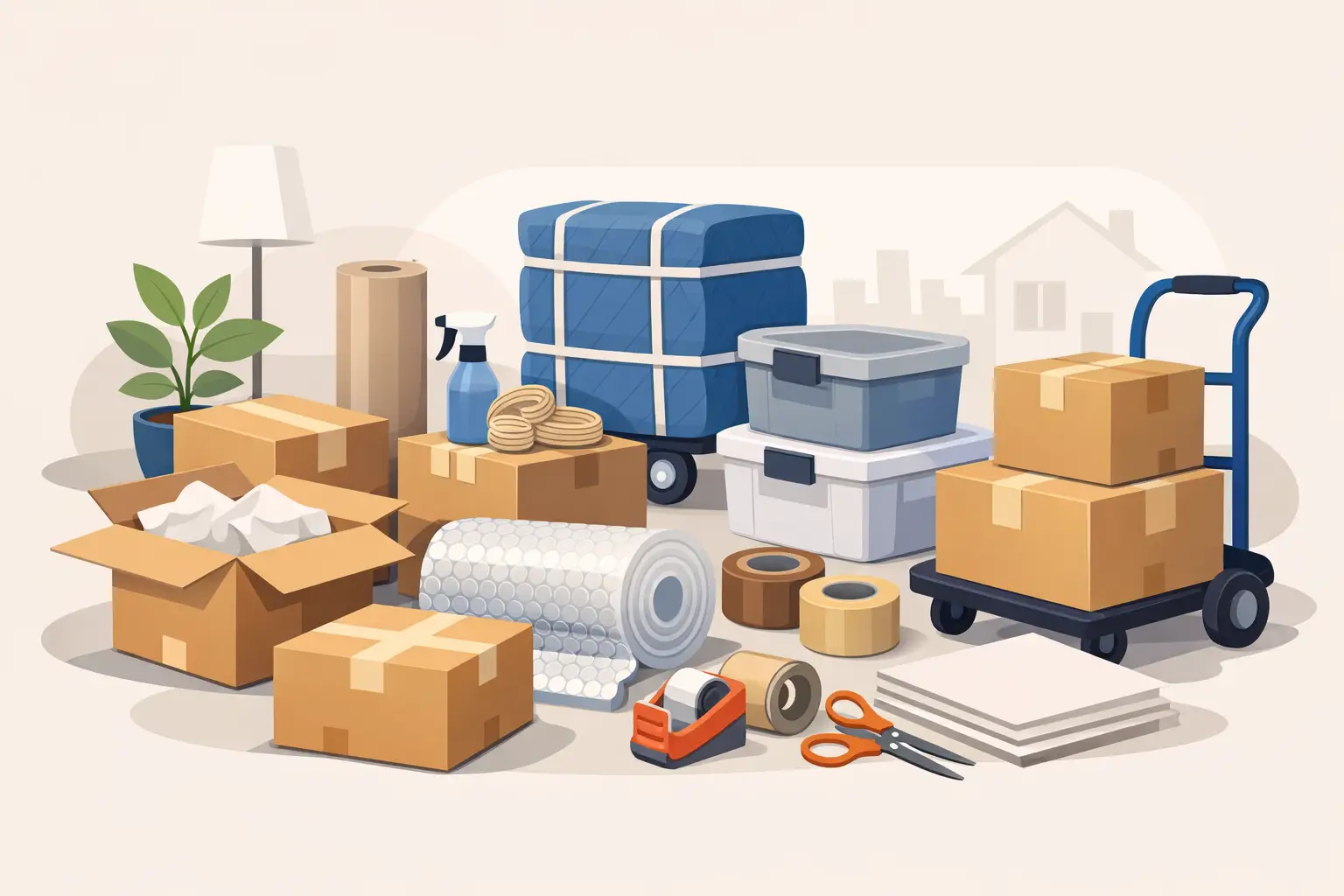
Boxes get the attention, but the supporting supplies do the real protection work. Packing tape should be strong enough to hold box seams closed without peeling under pressure or temperature changes. Cheap tape tends to fail at the worst time, usually when a box is being lifted.
Bubble wrap, packing paper, and stretch wrap all serve different purposes. Packing paper is ideal for wrapping dishes, glasses, and decorative items without leaving ink marks behind. Bubble wrap is better for fragile items that need impact protection. Stretch wrap helps secure drawers, bundle loose items, and keep furniture pads in place.
Labels and markers are not optional if you want an organized move. Clear labeling speeds up unloading and helps boxes end up in the right room the first time. That matters whether you are moving into a Nashville condo, a family home in Franklin, or a new office in Knoxville.
Mattress bags, sofa covers, and furniture pads also deserve attention. These supplies protect larger items from dirt, moisture, and scuffs, especially during bad weather or when pieces need to pass through tight hallways and stairwells.
How much should you buy?
This is where many people either underbuy and scramble at the last minute or overbuy and waste money. The right amount depends on the size of the home, how long you have lived there, and how many storage areas you have filled over the years.
A one-bedroom apartment may need a modest mix of small, medium, and large boxes, plus tape, paper, and a few specialty cartons. A three- or four-bedroom home often needs much more than people expect, especially if there is a garage, attic, home office, or children’s playroom involved. Businesses may need fewer large boxes but more specialty containers for files, electronics, and equipment.
A good rule is to think in categories, not just room count. Kitchens and home offices usually require more packing materials per square foot than bedrooms. Garages can go either way depending on tools, seasonal decor, and storage bins. If you are unsure, it is better to estimate conservatively and have a small cushion than to run out halfway through packing the breakables.
Where quality matters most
Not every box has to be top tier, but some items should never be packed with flimsy materials. Fragile dishware, electronics, framed art, antiques, glass tabletops, and anything with sentimental value deserve stronger protection. The same goes for heavy items that can blow out a weak box bottom.
Quality also matters if your move includes long-distance transport or storage. Boxes may be stacked for longer periods, handled multiple times, or exposed to changing temperatures and humidity. In those situations, stronger corrugated boxes and better wrapping materials can prevent crushed corners, broken contents, and moisture issues.
For local moves, you may have more flexibility, but even then, the basics should still be dependable. A short move across town can still involve stairs, elevators, rain, or tight doorways. Good supplies reduce those risks.
Packing smarter, not just faster
Even the best materials cannot make up for poor packing habits. Heavy items should go in small boxes. Empty space inside a box should be filled so contents do not shift during transport. Plates should be wrapped and packed vertically, not stacked flat. Lampshades, cords, and hardware should be packed with care and labeled clearly.
One common mistake is overfilling boxes. If a box is bulging, hard to tape closed, or too heavy to carry safely, it is not packed correctly. Another is mixing unrelated items from multiple rooms without a label system. That tends to create confusion on moving day and slows down unpacking later.
If you are handling your own packing, start earlier than you think you need to. Packing always takes longer than expected, especially once you get into closets, cabinets, and storage spaces. If time is tight or the move includes fragile, oversized, or high-value items, professional packing support can take a lot of pressure off your schedule.
Moving boxes and supplies for different types of moves
An apartment move usually calls for efficiency. Fewer boxes, cleaner labeling, and easy-to-carry loads matter when parking is limited or elevators are involved. A single-family home move often requires more planning because the volume is higher and there are usually more fragile and seasonal items.
Senior moves often need a more careful pace and a more selective approach to packing. In those situations, organization matters just as much as protection. Commercial moves tend to focus on minimizing downtime, which makes labeled boxes, equipment protection, and room-by-room coordination especially important.
That is one reason many customers prefer working with a full-service team that can handle both supplies and labor. Good Time Moving & Storage helps customers across Tennessee simplify the process with dependable moving services, packing support, and the materials needed to protect belongings from start to finish.
When professional help makes sense
Some moves are manageable with a few boxes and a weekend plan. Others are more complicated. If you are moving a large home, downsizing a parent, relocating an office, or dealing with fragile or heavy items, the right supplies are only part of the equation. Professional movers can help make sure those materials are used correctly and efficiently.
That does not mean every move needs full packing service. Sometimes it makes sense to pack clothes, books, and basic household items yourself while leaving artwork, mirrors, glassware, or specialty items to experienced movers. It depends on your timeline, your comfort level, and what you can afford. The best approach is the one that protects your belongings without creating more stress than it saves.
A move usually feels biggest in the final week, when every room seems half packed and time starts moving faster than expected. If your boxes are strong, your supplies are right, and your plan is realistic, that week gets a lot more manageable.