Best Boxes for Moving for a Safer, Easier Move
A box that splits open on the stairs or crushes under a stack of books can turn move-in day into a costly problem. Choosing the best boxes for moving is not about buying the biggest bundle available. It is about matching the right box to the item, protecting what matters, and giving your movers a load that can be handled safely and efficiently.
For households across Nashville, Knoxville, and surrounding Tennessee communities, a better packing plan starts with sturdy, purpose-built moving boxes. The right supplies reduce breakage, speed up loading, and make unpacking far less frustrating when you arrive at your new home.
What Makes a Moving Box Worth Buying?
Moving boxes are built differently from ordinary retail boxes. A quality moving carton has consistent dimensions, strong seams, and cardboard rated to carry weight without bowing or tearing. That matters when boxes are stacked in a moving truck, carried through an apartment hallway, or placed in storage.
Used boxes can save money, but only if they are clean, dry, odor-free, and still structurally sound. A box that has been weakened by moisture, crushed at the corners, or repeatedly taped and retaped is not a smart place for dishes, electronics, or family keepsakes. Reusing a solid box for light household items is often fine. For heavier or fragile belongings, new moving boxes are the safer choice.
Standardized boxes also make a real difference. When cartons stack evenly, a professional crew can load the truck more securely and use the available space more effectively. Odd-shaped grocery boxes, thin delivery cartons, and overloaded plastic bags create gaps, shifting, and unnecessary risk.
The Best Boxes for Moving Each Part of Your Home
There is no single box size that works for every room. The most reliable approach is to use a mix of sizes and pack each one according to weight, not just how much space an item takes up.
Small boxes for heavy items
Small boxes are the workhorses of a well-packed move. They are ideal for books, canned goods, tools, small appliances, records, hand weights, and dense kitchen items. Their limited size prevents a common packing mistake: filling one large carton with items that no one can safely lift.
Books should be packed flat or with their spines down, with heavier volumes on the bottom. Keep each small box manageable, even if there appears to be room for more. A box that is too heavy is harder to carry, more likely to fail, and more likely to damage whatever sits beneath it in the truck.
Medium boxes for everyday household items
Medium cartons are often the most versatile boxes in a move. Use them for pots and pans, pantry goods, toys, shoes, folded clothing, small lamps, office supplies, and bathroom items. They are large enough to hold a useful amount but small enough to remain easy to carry when packed correctly.
For kitchen packing, medium boxes work well for cookware and dry goods, while fragile glasses and plates need additional protection. Fill open spaces with packing paper or clean towels so items cannot shift during transport. Avoid using newspaper directly against dishes or glassware because ink can transfer onto surfaces.
Large boxes for lightweight, bulky belongings
Large boxes are best for items that take up plenty of space without adding much weight. Think pillows, comforters, bedding, towels, stuffed animals, bulky winter coats, and lightweight plastic kitchenware. They can also work for lampshades when those are protected and packed upright.
The trade-off is simple: large boxes become difficult to handle quickly when heavy items are added. Do not use them for books, dish collections, appliances, or dense decor. If you cannot lift a carton comfortably before it is sealed, it is too heavy to move safely.
Wardrobe boxes for hanging clothes
Wardrobe boxes include a metal hanging bar, allowing you to transfer clothes directly from the closet to the box. They are a practical option for suits, dresses, coats, formalwear, and anything you would rather not fold. They also help keep clothing cleaner during the move.
Wardrobe boxes cost more than standard cartons and take up more truck space, so they may not be necessary for every closet. They are most useful for a short list of wrinkle-prone clothing or for households that need to pack quickly. You can place lightweight shoes, purses, or folded linens at the bottom, but do not overload the box.
Dish packs for breakable kitchen items
Dish pack boxes are heavy-duty cartons designed for plates, bowls, glasses, mugs, serving dishes, and other fragile kitchen belongings. Their stronger construction provides better protection than a regular medium box, especially when combined with packing paper and dividers.
Wrap each piece individually, place plates vertically rather than flat when possible, and cushion the bottom and top of the carton. Glasses should be filled with paper, wrapped separately, and packed upright. Mark the box “Fragile” and “This Side Up,” but pack it carefully enough that it remains protected even if it is briefly tilted.
Picture and mirror boxes for flat, fragile items
Artwork, framed photos, mirrors, and wall-mounted TVs need boxes shaped for their size. Adjustable picture and mirror cartons are designed to fit around flat items and protect vulnerable corners. Use corner protectors, padding, and clear labels to identify glass.
For valuable art, antique mirrors, or oversized televisions, professional packing is often worth considering. These items are difficult to replace, and a standard box rarely gives them enough protection.
Specialty Boxes That Can Save Time and Damage
Some supplies are not necessary for every move, but they solve specific packing problems well. Electronics boxes can be useful for computers, monitors, and gaming systems, particularly if you still have the original packaging. Mattress bags protect mattresses from dirt and moisture. Lamp boxes help protect tall lamps, while stretch wrap keeps dresser drawers, furniture pads, and bundled items secure.
If you are moving bottles, collectibles, musical equipment, or unusually shaped decor, ask for packing advice before choosing a carton. For example, a piano, large safe, antique furniture piece, or delicate instrument needs more than a good box. It needs specialized handling, proper equipment, and an experienced crew.
How Many Boxes Do You Need?
The answer depends on the size of your home, how long you have lived there, and how much you plan to declutter before packing. A minimalist one-bedroom apartment may need a modest mix of small, medium, and large boxes. A family home with a garage, attic, children’s rooms, and a full kitchen will need substantially more.
Instead of guessing, walk through every room, closet, cabinet, and storage area. Count fragile items separately, since they require more paper, more time, and often stronger cartons. Do not forget seasonal decorations, garage tools, cleaning supplies, and the items stored above closets.
It is wise to have a few extra boxes on hand. Most people underestimate the number of belongings tucked into drawers and cabinets. Running out of boxes late at night before moving day creates rushed packing, which is when items get mixed together, under-protected, or left behind.
Pack Boxes So They Travel Safely
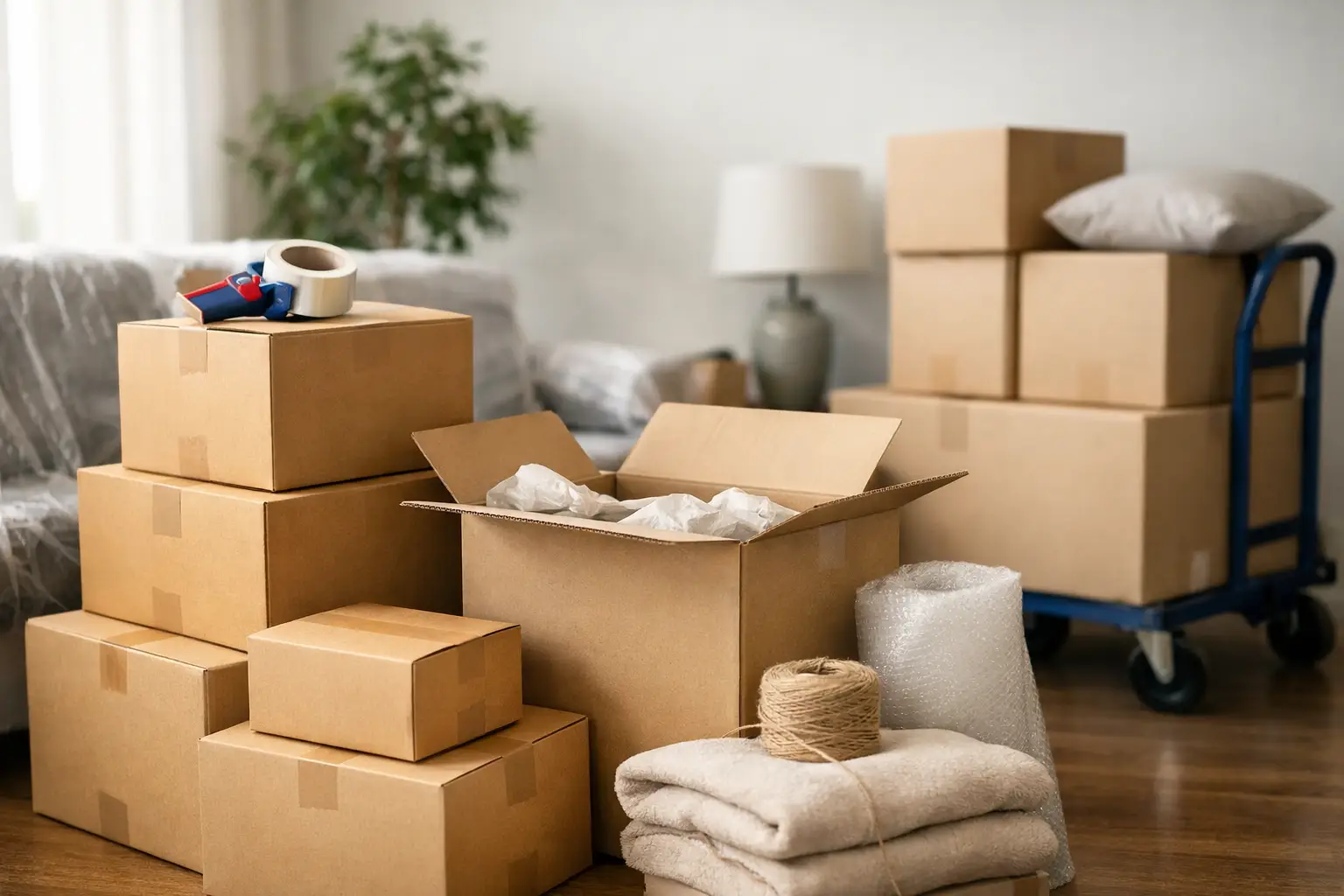
Even the best box cannot protect belongings if it is packed carelessly. Tape the bottom seam with quality packing tape, using multiple strips for heavier cartons. Put heavier items on the bottom, lighter items on top, and fill empty space with paper, towels, or bubble cushioning so the contents do not move.
Keep each box focused on one room whenever possible. Label two sides with the room name and a short description, such as “Kitchen – baking dishes” or “Main bedroom – winter clothes.” Clear labeling makes unloading faster and helps you find essentials without opening every carton.
Do not pack hazardous or restricted items with household goods. Paint, propane tanks, gasoline, fireworks, and many chemicals require separate disposal or transport arrangements. Perishable food, important documents, medication, jewelry, and daily essentials should travel with you rather than in the moving truck.
When Professional Packing Makes Sense
Packing your own home can lower upfront costs, but it takes time and attention. Professional packing is especially helpful when you are on a tight timeline, coordinating a long-distance move, helping a senior relocate, or packing a home with many fragile belongings. It can also reduce the stress of handling kitchens, artwork, and large furniture on your own.
Good Time Moving & Storage can provide the boxes, packing materials, and experienced packing support needed to protect your belongings from pickup through delivery. Licensed, insured movers can help you choose the right level of service without adding unnecessary work or surprise costs to your move.
A safer move starts before the truck arrives. Choose boxes that fit the items you own, keep heavy loads small, protect fragile pieces with purpose-built cartons, and give yourself enough time to pack with care.