How to Store Moving Boxes Properly: A Complete Guide to Protecting Your Belongings
Storing boxes after a move or before a relocation is something many people underestimate. Learning how to store moving boxes the right way can protect your belongings from damage, save space, and make your next move much easier. Whether you are storing items for a few weeks or several months, the way boxes are packed and stored plays a major role in keeping everything safe.
This guide explains practical, real-world methods used by experienced movers and storage professionals. It is designed to help homeowners, renters, and families avoid common storage mistakes while keeping items clean, dry, and organized.
Why Proper Storage of Moving Boxes Matters
Improper storage can cause serious damage over time. Moisture, pests, poor stacking, and temperature changes can ruin items that were packed perfectly.
Common problems caused by poor storage include:
- Warped furniture and crushed boxes
- Mold growth inside cardboard boxes
- Dust and pest damage
- Difficulty finding items later
Local professionals often see these issues when customers retrieve stored items. Most of them are avoidable with proper storage planning.
How to Store Moving Boxes Safely and Efficiently
Choose the Right Storage Location
The first step in understanding how to store moving boxes is choosing a suitable location.
Best storage options include:
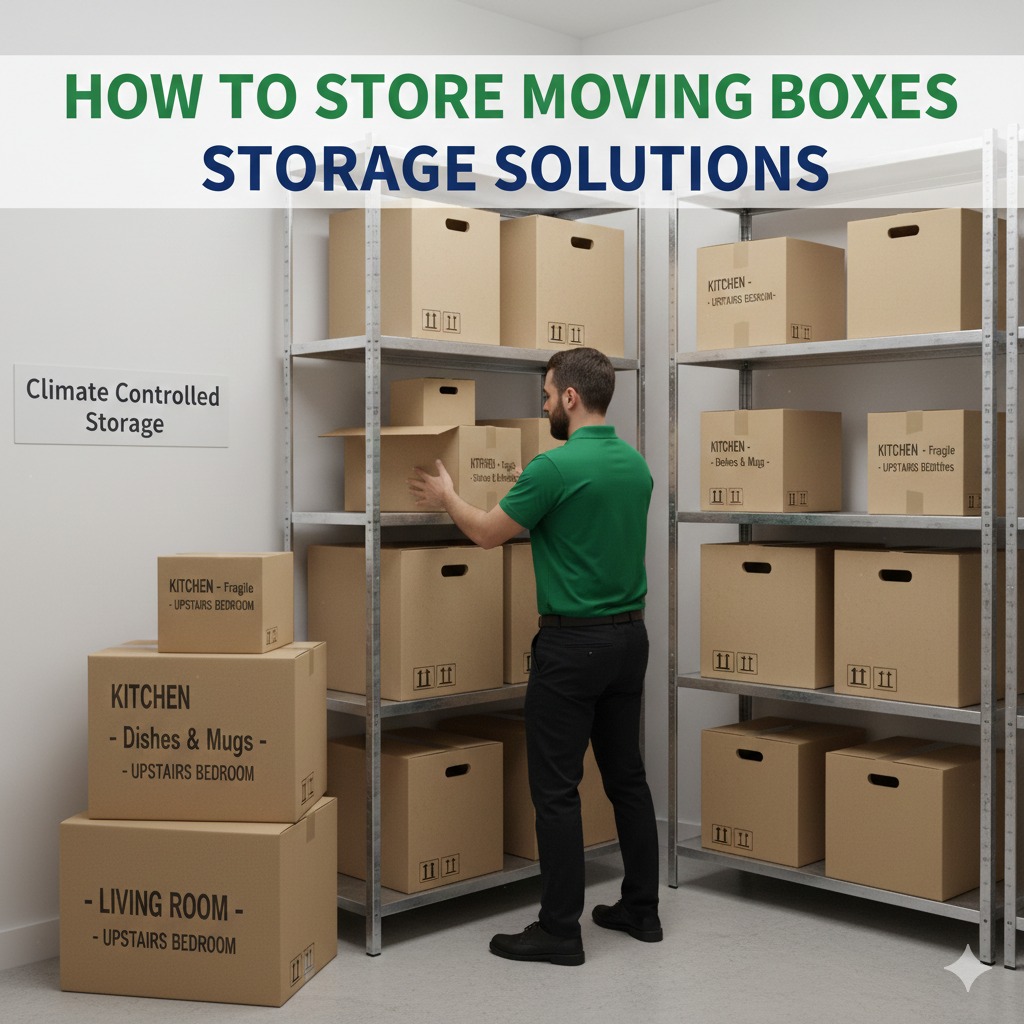
- Climate-controlled storage units
- Clean, dry garages
- Indoor storage rooms or basements with low humidity
Climate-controlled storage is ideal for electronics, documents, artwork, and wooden furniture. Many families in Nashville, Franklin, and Brentwood choose this option to protect items from heat and humidity.
Prepare Boxes Before Storage
Never place boxes directly into storage without preparation.
Before storing:
- Ensure all items are completely dry
- Reinforce box bottoms with extra tape
- Replace weak or damaged boxes
- Avoid using old grocery boxes
Strong boxes maintain their shape and protect contents during long-term storage.
How to Store Moving Boxes to Prevent Moisture Damage
Moisture is one of the biggest threats to stored belongings.
Elevate Boxes Off the Floor
Always place boxes on pallets, shelving, or plastic bins. Concrete floors can trap moisture, even in indoor units.
Use Moisture Protection
Helpful tools include:
- Silica gel packets inside boxes
- Moisture absorbers in storage units
- Plastic wrap for furniture
These simple steps are commonly recommended by experienced storage professionals.
Smart Box Stacking Techniques for Storage
Proper stacking keeps boxes safe and prevents collapse.
Stack Heavier Boxes at the Bottom
Heavy items should always be placed at the bottom, with lighter boxes on top. This maintains stability and prevents crushing.
Keep Stack Heights Manageable
Avoid stacking boxes too high. Tall stacks can tip over and damage contents.
Leave Walkways
Create narrow aisles so you can access boxes without moving everything. This is especially helpful for long-term storage.
Labeling and Organization Tips for Stored Boxes
Labeling becomes even more important when storing boxes for extended periods.
Each box should include:
- Room name
- General contents
- Storage priority such as “open first” or “seasonal”
- Fragile warnings if needed
Color-coded labels or numbering systems can make retrieval much easier later.
How to Store Moving Boxes for Long-Term Storage
Long-term storage requires additional care.
Avoid Plastic Bags for Storage
Plastic bags trap moisture and can lead to mold. Cardboard boxes with proper airflow are better for most items.
Store Items by Category
Group similar items together such as kitchenware, clothing, or office supplies. This prevents unnecessary searching later.
Keep Essentials Accessible
If you may need certain items before the storage period ends, store those boxes near the front.
Special Storage Tips for Common Household Items
Clothing and Linens
Use wardrobe boxes or vacuum-sealed bags inside boxes. Avoid storing clothes directly on the floor.
Electronics
Wrap electronics in anti-static materials and store them in climate-controlled environments whenever possible.
Books and Documents
Store books flat or spine-down. Important documents should be sealed in waterproof containers.
Common Mistakes People Make When Storing Moving Boxes
Many storage problems come from simple mistakes.
Overpacking Boxes
Boxes that are too full can burst or collapse over time.
Storing Without Labels
Unlabeled boxes lead to confusion and unnecessary unpacking.
Ignoring Temperature Changes
Extreme heat or cold can damage wood, electronics, and artwork.
Using Low-Quality Boxes
Weak boxes deteriorate quickly in storage environments.
Short-Term vs Long-Term Storage: What’s the Difference?
Short-Term Storage
Ideal for:
- Temporary housing transitions
- Renovations
- Short relocation gaps
Basic organization and moisture protection are usually sufficient.
Long-Term Storage
Best for:
- Extended relocations
- Downsizing
- Military or job transfers
Long-term storage requires climate control, better labeling, and routine checks.
Many families working with trusted service providers like Good Time Moving and Storage choose professional storage options to avoid these risks, especially in cities like Knoxville and surrounding Tennessee areas.
Real-Life Storage Example
A homeowner moving from Nashville to Knoxville stored seasonal furniture and boxed household items for six months. By using climate-controlled storage, elevating boxes, and labeling everything clearly, they were able to retrieve items in perfect condition with minimal effort.
This approach mirrors best practices used by experienced local movers and storage teams.
Best Practices Used by Professional Movers
Experienced teams follow proven storage methods, including:
- Using uniform box sizes for stacking
- Creating detailed inventory lists
- Separating fragile and heavy items
- Maintaining airflow between box stacks
These techniques help reduce damage and improve access over time.
Frequently Asked Questions
Boxes should be stored off the floor, stacked properly, labeled clearly, and kept in dry, climate-controlled environments when possible.
It is highly recommended for electronics, documents, antiques, and wooden furniture, especially in humid areas.
With proper conditions, boxes can be stored for several months or even years without damage.
Plastic bins are good for moisture-sensitive items, but cardboard boxes allow better airflow for general storage.
Yes, but only if the garage is clean, dry, and protected from temperature extremes and pests.
Professionals use reinforced boxes, pallet elevation, climate control, and organized stacking methods to ensure long-term protection.
Final Thoughts on How to Store Moving Boxes
Understanding how to store moving boxes properly protects your belongings, saves space, and reduces stress when it is time to unpack. With the right preparation, labeling, and storage environment, your items can remain safe for both short-term and long-term storage.
Whether you are storing items during a move in Nashville, Knoxville, Franklin, or nearby Tennessee cities, following these proven storage practices helps ensure everything stays exactly as you left it.