Categories for Moving Boxes: A Complete Guide for a Safe & Organized Move
Choosing the right packing supplies is one of the most important steps in any relocation. Whether you are moving locally or long-distance, understanding the categories for moving boxes can save time, prevent damage, and reduce moving stress. Many people think all boxes are the same, but professional movers know that each item requires a specific box type.
In this guide, we’ll explain the main categories of moving boxes, their uses, and how professional moving companies rely on the right boxes to ensure a smooth and damage-free move.
Why Understanding Categories for Moving Boxes Matters
Using the wrong box can lead to:
- Broken items
- Poor weight distribution
- Difficult loading and unloading
- Higher risk of injuries
When you choose boxes based on proper categories for moving boxes, your belongings stay secure, movers work faster, and unpacking becomes much easier.
Professional movers always categorize boxes to protect furniture, electronics, fragile items, and valuables during transport.
1. Small Moving Boxes
Small boxes are ideal for heavy items that should not be overloaded.
Best for:
- Books
- Tools
- Canned food
- Small appliances
These boxes prevent excessive weight while keeping items secure. One of the most important categories for moving boxes, small boxes are commonly used by movers for compact but heavy belongings.
2. Medium Moving Boxes
Medium boxes are the most commonly used boxes during a move.
Best for:
- Kitchen items
- Toys
- Office supplies
- Small décor pieces
They offer the perfect balance between size and weight, making them easy to carry and stack. Movers rely heavily on this category for general household packing.
3. Large Moving Boxes
Large boxes are designed for lightweight but bulky items.
Best for:
- Pillows
- Blankets
- Lampshades
- Clothing (folded)
Using large boxes for heavy items can cause box failure. Professional movers always match the right category of box with the correct item type.
4. Extra-Large Moving Boxes
Extra-large boxes are used sparingly and carefully.
Best for:
- Comforters
- Bulk lightweight items
- Seasonal décor
These boxes should never be overloaded. In the list of categories for moving boxes, extra-large boxes require special attention to avoid damage.
5. Wardrobe Boxes
Wardrobe boxes are tall boxes with a built-in hanging bar.
Best for:
- Dresses
- Suits
- Jackets
- Coats
These boxes eliminate the need for folding clothes and help maintain garment condition. Many moving companies recommend wardrobe boxes for professional, wrinkle-free moves.
6. Dish Pack Boxes (Kitchen Boxes)
Dish pack boxes are double-walled and extra sturdy.
Best for:
- Plates
- Glassware
- Bowls
- Cups
Among all categories for moving boxes, dish packs offer maximum protection for fragile kitchen items and are a favorite among professional movers.
7. Picture and Mirror Boxes
These adjustable boxes are designed specifically for flat, fragile items.
Best for:
- Framed artwork
- Mirrors
- Large photos
Movers often combine these boxes with corner protectors and padding for added security during transport.
8. Electronics Boxes
Electronics boxes are designed to protect sensitive equipment.
Best for:
- TVs
- Monitors
- Computers
- Printers
Professional movers prefer original packaging, but when unavailable, electronics boxes are the safest alternative in the categories for moving boxes.
9. Specialty Boxes
Some items need custom solutions.
Examples:
- Mattress boxes
- Golf club boxes
- Lamp boxes
- Wine boxes
These specialty boxes ensure unique items remain secure and undamaged during the move.
How Movers Use Categories for Moving Boxes Efficiently
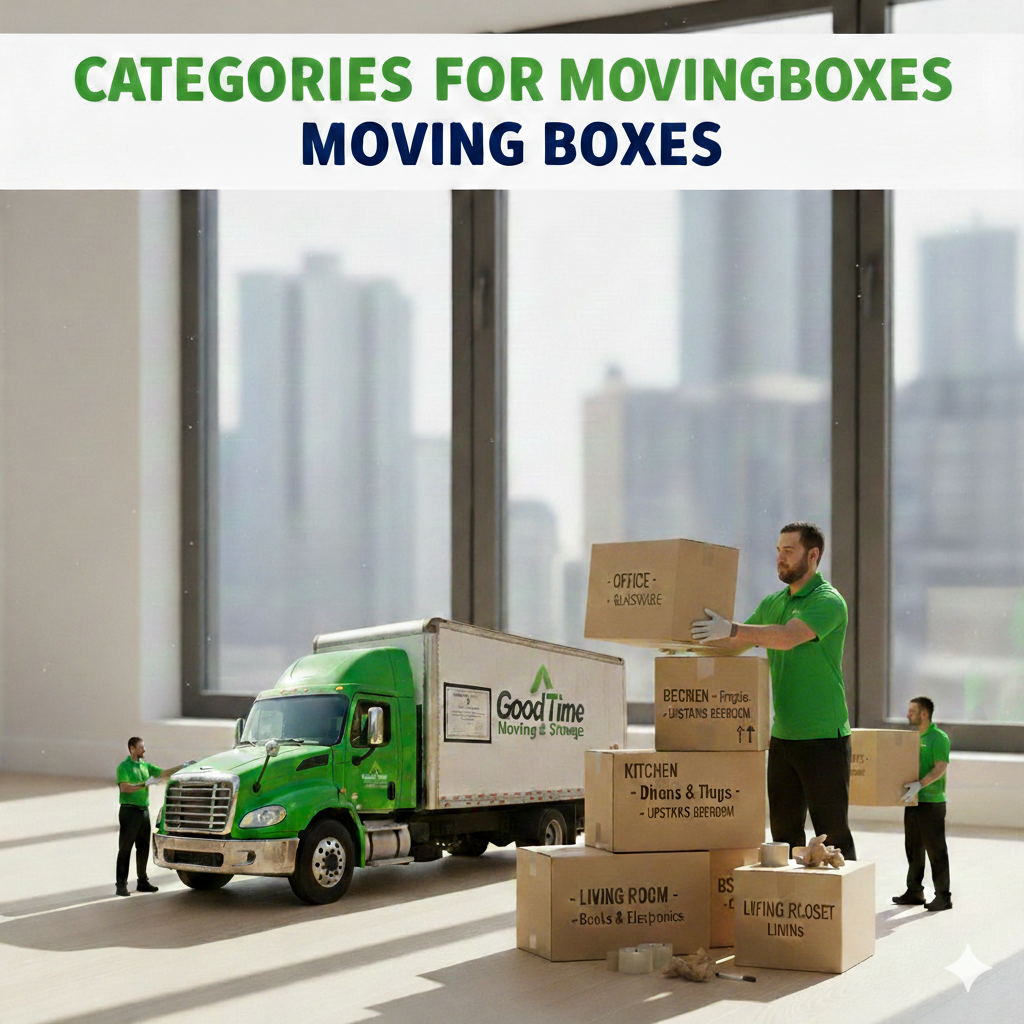
Professional movers don’t just pack randomly. They:
- Assign specific box types to specific rooms
- Label boxes based on category and destination
- Stack boxes safely according to size and weight
This organized approach speeds up loading, unloading, and unpacking.
Commercial Benefits of Using the Right Moving Boxes
From a moving company’s perspective, using the correct categories for moving boxes:
- Reduces damage claims
- Improves customer satisfaction
- Increases efficiency
- Protects liability
That’s why reputable movers always offer box options as part of their services.
Should You Buy Boxes or Let Movers Provide Them?
Many professional moving companies provide:
- High-quality boxes
- Packing materials
- Professional packing services
Hiring movers who supply boxes saves time and ensures you get the correct box categories for your belongings.
Tips for Choosing the Right Categories for Moving Boxes
- Match box size to item weight
- Never overload boxes
- Use padding inside fragile boxes
- Label each box clearly
- Stack heavier boxes at the bottom
These tips help protect your belongings and make moving day smoother.
FAQs
The main categories include small boxes, medium boxes, large boxes, extra-large boxes, wardrobe boxes, dish pack boxes, picture and mirror boxes, electronics boxes, and specialty boxes. Each category is designed for specific types of items to ensure safe and efficient moving.
Choose a box based on the weight, size, and fragility of your items. Heavy items like books go into small boxes, while bulky but lightweight items like blankets go into large or extra-large boxes. Fragile items like dishes need dish pack boxes, and clothes on hangers should go in wardrobe boxes.
Yes, specialty boxes are essential for unique items like mattresses, wine bottles, golf clubs, or large artwork. They provide extra protection that standard boxes can’t offer, reducing the risk of damage during transport.
You can reuse boxes, but make sure they are sturdy and undamaged. Weak or worn-out boxes can collapse, putting your items at risk. For fragile or heavy items, it’s better to use boxes specifically designed for moving.
Professional movers often provide high-quality boxes tailored to your items. Using their boxes ensures you get the correct categories, saving time and reducing the risk of damage. However, if you prefer, you can buy boxes from moving supply stores, but always match the category to your item type.
Final Thoughts
Understanding the categories for moving boxes is essential for a successful move. From small boxes for heavy items to specialty boxes for fragile valuables, each category serves a specific purpose. Choosing the right boxes protects your belongings, saves time, and makes your move safer and more organized.
If you want a stress-free relocation, working with professional movers who use the right box categories can make all the difference.