How to Pack Moving Boxes the Right Way: A Complete Step-by-Step Guide for a Safe Move
Packing is one of the most important parts of any move. Knowing how to pack moving boxes correctly can save you time, prevent damage, and make unpacking far easier at your new place. Whether you are moving across town or relocating to another city, the way you pack directly impacts how smoothly everything goes.
This guide is written to help homeowners, renters, and families understand the best practices for packing moving boxes safely and efficiently. It covers supplies, room-by-room strategies, common mistakes, and professional tips used by experienced local movers.
Why Proper Packing Matters During a Move
Packing is not just about putting items into boxes. It is about protecting your belongings, organizing your move, and reducing stress on moving day.
Poor packing can lead to:
- Broken dishes and damaged furniture
- Lost or misplaced items
- Slower loading and unloading
- Higher moving costs due to extra labor or replacements
Professional moving teams see these issues every day, and most of them are preventable with the right approach.
Essential Supplies You Need Before Packing
Before learning how to pack moving boxes, it is important to gather the right materials. Quality supplies make a noticeable difference.
Basic Packing Materials
- Sturdy cardboard boxes in multiple sizes
- Packing tape with a strong adhesive
- Bubble wrap or packing paper
- Stretch wrap for furniture and drawers
- Permanent markers for labeling
- Box cutters or scissors
Using uniform, high-quality boxes makes stacking easier and reduces the risk of collapse during transport.
How to Pack Moving Boxes Step by Step
Start With a Packing Plan
Begin packing non-essential items first. Seasonal décor, books, extra linens, and rarely used kitchenware should be packed weeks before the move. Leave daily essentials for last.
Creating a simple packing timeline keeps you organized and prevents last-minute rushing.
Choose the Right Box Size for Each Item
One of the most common mistakes is using large boxes for heavy items. This increases the risk of box failure and injuries.
Best practice:
- Small boxes for books, tools, canned goods
- Medium boxes for kitchen items and toys
- Large boxes for bedding, pillows, and clothing
Heavier items should always go in smaller boxes to keep weight manageable.
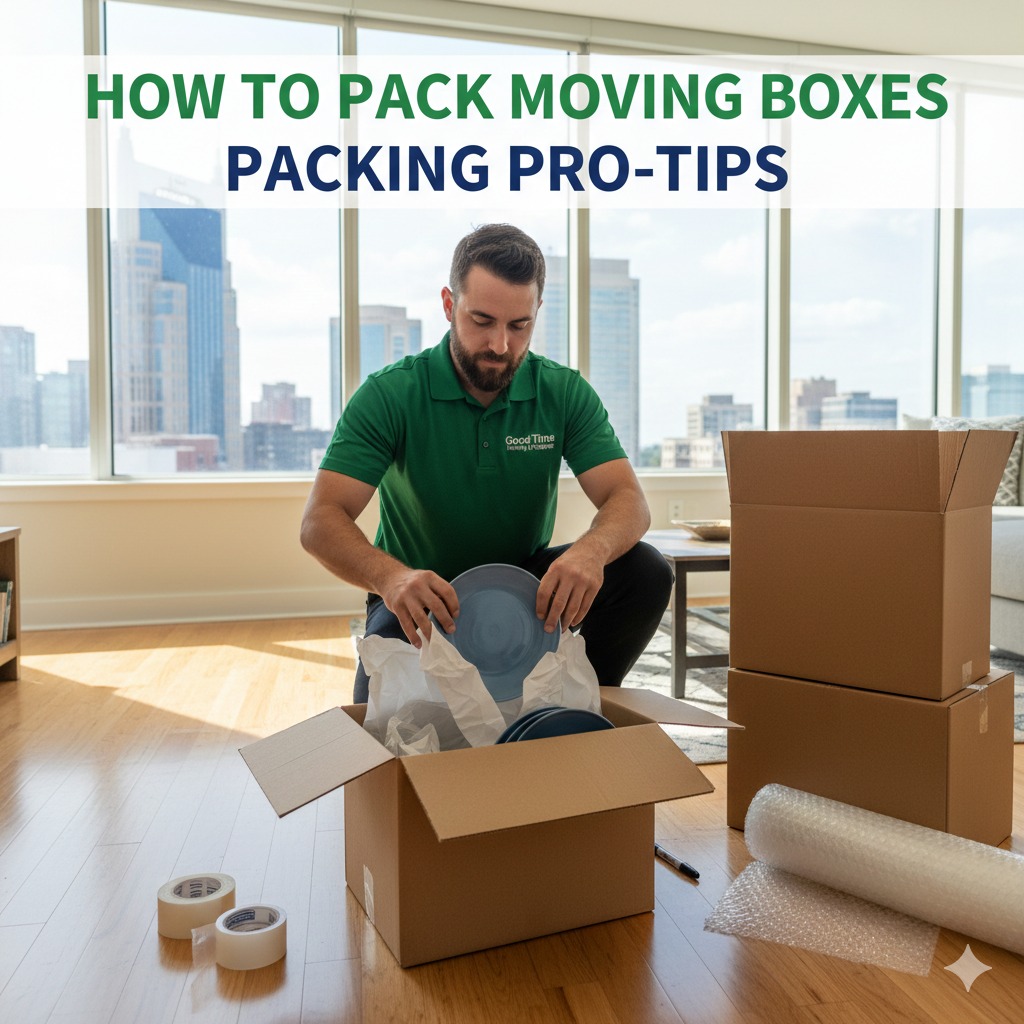
How to Pack Moving Boxes for Fragile Items
Fragile items need extra care and proper layering.
Steps to follow:
- Line the bottom of the box with crumpled packing paper
- Wrap each item individually with bubble wrap or paper
- Place heavier items at the bottom
- Fill all empty spaces to prevent movement
- Add padding on top before sealing
Dishes should be packed vertically, not stacked flat. Glassware should be wrapped and placed upside down for added strength.
Packing Room by Room for Better Organization
Packing one room at a time helps keep items organized and makes unpacking easier.
Kitchen Packing Tips
- Use dish packs or reinforced boxes for plates and glasses
- Wrap utensils together to save time
- Pack pantry items separately and check expiration dates
Bedroom Packing Tips
- Use wardrobe boxes for hanging clothes
- Pack shoes in small boxes with paper inside
- Keep bedding together for easy first-night setup
Living Room Packing Tips
- Remove batteries from electronics
- Wrap cords and label them clearly
- Use blankets to protect TVs and artwork
Labeling Boxes the Right Way
Labeling is just as important as packing. Every box should have:
- Room name
- Brief content description
- Fragile notice if applicable
- Directional arrows for upright items
Professional movers rely on clear labels to place boxes correctly, especially in multi-story homes.
How to Pack Moving Boxes for Heavy or Awkward Items
Some items require special attention.
Books and Documents
Pack books flat or spine-down to prevent damage. Important documents should travel with you, not in the moving truck.
Electronics
Use original boxes if available. If not, wrap devices in anti-static bubble wrap and secure them tightly.
Lamps and Décor
Remove lampshades and wrap them separately. Pack bases with padding and avoid placing heavy items nearby.
Common Packing Mistakes to Avoid
Many moving problems come from avoidable errors.
Overloading Boxes
Boxes that are too heavy are more likely to break and cause injuries.
Skipping Padding
Empty spaces inside boxes allow items to shift and break during transport.
Poor Labeling
Unlabeled boxes slow down unloading and lead to confusion.
Mixing Items From Different Rooms
This makes unpacking frustrating and disorganized.
DIY Packing vs Professional Packing Services
Understanding the difference helps you decide what works best for your move.
DIY Packing
Best for small moves or when you have time and experience. It can save money but requires careful planning.
Professional Packing
Ideal for large homes, fragile items, or tight schedules. Experienced teams know exactly how to pack moving boxes safely and efficiently.
Many local professionals, including trusted service providers like Good Time Moving and Storage, offer partial or full packing assistance for homeowners in Nashville, Knoxville, Franklin, Brentwood, and surrounding Tennessee communities.
Best Practices Used by Experienced Movers
Professional movers follow proven methods that reduce damage and improve efficiency.
Key best practices include:
- Double-taping box bottoms
- Using consistent box sizes
- Keeping weight evenly distributed
- Packing essentials boxes for quick access
- Securing boxes tightly in the moving truck
These techniques are especially useful for long-distance moves or multi-day relocations.
Real-Life Packing Example
A family moving from Nashville to Franklin often starts packing early by clearing storage areas and guest rooms first. Fragile kitchen items are packed last and labeled clearly. Essential items like chargers, toiletries, and documents are kept in a personal bag. This approach reduces stress and prevents last-minute chaos on moving day.
How Packing Supports a Smooth Moving Day
Well-packed boxes:
- Load faster
- Stack securely
- Reduce unloading time
- Protect valuables
- Make unpacking simpler
This is why experienced teams emphasize packing quality as much as transportation.
Frequently Asked Questions
Use sturdy boxes, wrap items individually, fill empty spaces, and avoid overloading. Proper labeling also improves handling.
It depends on home size. A one-bedroom apartment typically needs 30 to 50 boxes, while larger homes may need over 100.
No. Heavy items should always go in small boxes to prevent breakage and injuries.
Start packing non-essential items at least three to four weeks before your move.
For large homes, fragile items, or busy schedules, professional packing can save time and reduce damage.
Experienced movers use careful loading techniques, secure stacking, and designated fragile zones inside the truck.
Final Thoughts on How to Pack Moving Boxes
Learning how to pack moving boxes properly is one of the most valuable skills for a successful move. With the right supplies, a clear plan, and attention to detail, you can protect your belongings and reduce stress throughout the process.
Whether you are moving within Nashville, relocating in Knoxville, or settling into a nearby Tennessee city, careful packing lays the foundation for a smooth transition. Trusted local professionals and experienced teams continue to emphasize that good packing is not just preparation. It is the key to moving with confidence.