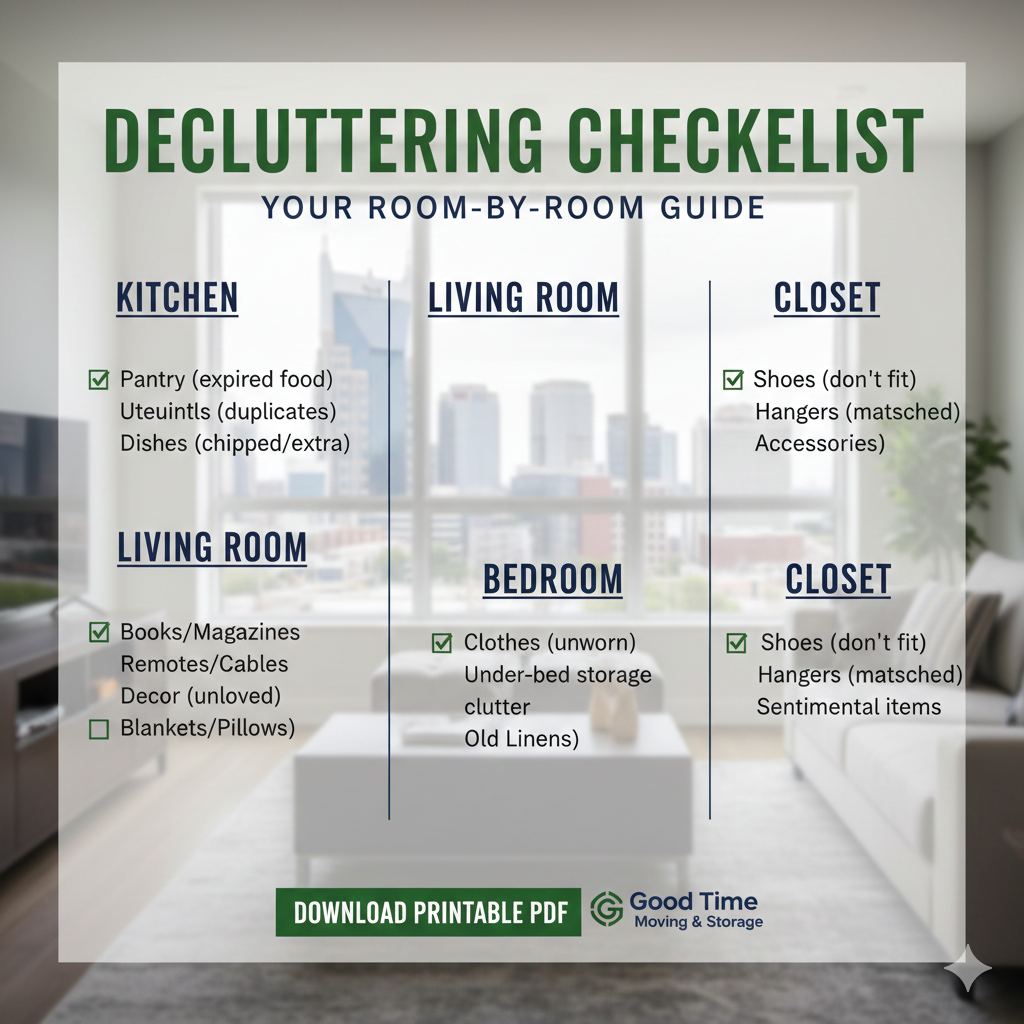
Decluttering Checklist: A Step-by-Step Guide to Declutter Your Home the Right Way
Decluttering feels much easier when you have a clear plan. A well-structured decluttering checklist helps you stay focused, avoid overwhelm, and actually finish what you start. Instead of randomly cleaning rooms, this guide gives you a practical, room-by-room system you can follow at your own pace.
Whether you are preparing for a move, downsizing, or simply trying to regain control of your space, this declutter your home checklist covers everything from closets and books to garages and toys. You will also understand what real declutter before and after progress looks like and how to maintain it long-term.
Why You Need a Decluttering Checklist
Many people start decluttering with good intentions but stop halfway. The reason is simple: no structure. A checklist removes guesswork and decision fatigue.
Benefits of using a decluttering checklist include:
- Clear direction on what to tackle next
- Faster progress with less stress
- Better decision-making
- Visible before-and-after results
- Long-term organization instead of temporary cleanup
This approach works especially well for families, seniors, and anyone preparing for a local or long-distance move.
If you’re looking to simplify your space, explore Decluttering Tips for Seniors: A Practical, Stress-Free Guide for a Simpler Life for practical strategies to declutter safely and make moving or downsizing easier.
How to Use This Decluttering Checklist
Before starting, keep these rules in mind:
- Declutter first, organize later
- Work in short sessions of 30 to 60 minutes
- Use three categories: Keep, Donate, Discard
- Start with low-emotion areas
Now let’s walk through the complete checklist.


Declutter Your Home Checklist: Room-by-Room
Entryway and Living Areas
- Remove unused shoes, bags, and coats
- Clear surfaces like tables and shelves
- Donate decorative items you no longer enjoy
- Remove broken or outdated furniture
Living spaces often show the most dramatic declutter before and after results because they are used daily.
Declutter Coat Closet
A cluttered coat closet quickly becomes a dumping zone.
Checklist for decluttering a coat closet:
- Remove coats not worn in the last two winters
- Donate duplicates and ill-fitting jackets
- Limit accessories like scarves and gloves
- Store seasonal items separately
A well-organized coat closet makes daily routines smoother and keeps clutter from spreading.
If you’re planning a long-distance relocation, read Best Ways to Move Cross Country: A Complete Guide for a Smooth Long-Distance Move to learn strategies for an organized, stress-free move.
Kitchen Decluttering Checklist
- Discard expired food and spices
- Donate unused appliances
- Reduce duplicate utensils
- Keep only everyday dishes accessible
Focus on function. If you do not use it weekly, reconsider keeping it.
Declutter Books Without Guilt
Books often carry emotional value, making them hard to declutter.
Checklist to declutter books effectively:
- Keep reference books you actually use
- Donate books you will not reread
- Remove outdated textbooks and manuals
- Limit shelves to available space
Many people keep books out of obligation. Keeping only meaningful or useful books creates lighter, calmer spaces.
Bedroom Decluttering Checklist
- Declutter nightstands and dressers
- Remove unused décor
- Limit furniture to essentials
- Create clear walking paths
Bedrooms should feel restful. Reducing clutter improves sleep and reduces stress.
Declutter Clothes the Smart Way
Clothing clutter is one of the most common challenges.
Clothing decluttering checklist:
- Remove items not worn in the past year
- Donate clothes that do not fit or feel comfortable
- Keep only what suits your current lifestyle
- Limit special-occasion clothing
This step often produces one of the biggest declutter before and after transformations.
Bathroom Decluttering Checklist
- Discard expired medications and cosmetics
- Reduce duplicate products
- Keep countertops clear
- Store only daily-use items
Bathrooms benefit greatly from minimalism due to limited storage space.
Declutter Toys Without the Stress
Toy clutter grows quickly, especially in family homes.
Checklist to declutter toys:
- Remove broken or incomplete toys
- Donate age-inappropriate toys
- Limit toys by category
- Rotate toys instead of keeping all out
Involving children in the process helps teach responsibility and reduces resistance.
Home Office Decluttering Checklist
- Shred unnecessary paperwork
- Digitize documents where possible
- Remove unused supplies
- Keep desk surfaces clear
A decluttered office improves focus, productivity, and mental clarity.
Garage Declutter Checklist
Garages often become long-term storage without intention.
Garage declutter checklist:
- Remove broken tools and equipment
- Donate unused sports gear
- Dispose of hazardous waste properly
- Create zones for tools, storage, and vehicles
A proper garage declutter can free up significant space and improve safety.
Storage Areas and Closets
- Declutter linen closets
- Reduce duplicate bedding and towels
- Store items by category
- Remove items you forgot you owned
If you forgot an item existed, it likely does not need to stay.
Declutter Before and After: What Real Progress Looks Like
Real decluttering is not about perfection. A successful declutter before and after result means:
- Clear surfaces
- Easy access to daily items
- Less time spent cleaning
- Reduced stress
Progress is measured by functionality, not aesthetics.
If you’re budgeting for your move, check out 2 Men and a Truck Rates: Understanding the Cost to Hire Movers to learn about pricing, factors that affect costs, and how to plan your relocation efficiently.
Common Decluttering Mistakes to Avoid
Trying to Declutter Everything at Once
This leads to burnout and unfinished projects.
Organizing Without Decluttering
Organizing clutter only hides the problem temporarily.
Keeping Items “Just in Case”
Most of these items never get used.
Ignoring Maintenance Habits
Without simple habits, clutter returns quickly.
How Long Does Decluttering Take?
The timeline depends on home size and consistency.
- Small apartment: 1–2 weeks
- Family home: 3–6 weeks
- Full downsizing or move prep: 1–2 months
Short daily sessions are more effective than long, exhausting weekends.
Decluttering Before Moving or Downsizing
Many households declutter before packing to reduce moving costs and stress. Local professionals like Good Time Moving and Storage often recommend decluttering weeks before a move begins. Fewer items mean fewer boxes, lower costs, and faster transitions.
This approach is especially helpful for families relocating within or from areas such as Nashville, Knoxville, Murfreesboro, Franklin, Brentwood, Hendersonville, Maryville, Alcoa, Oak Ridge, Farragut, and surrounding Tennessee cities.
If you’re planning a move, explore Two Men and a Truck Movers: Reliable Moving Services in Tennessee to learn how their professional team can handle your relocation safely and efficiently.
Frequently Asked Questions
What is the best way to use a decluttering checklist?
Follow it room by room, starting with low-emotion areas, and work in short sessions.
How often should I declutter my home?
Light decluttering every season and deeper decluttering once a year works well.
What should I declutter first?
Start with storage areas, closets, or bathrooms to build momentum.
Is decluttering better before organizing?
Yes, decluttering first prevents wasted time organizing items you do not need.
Should I declutter before moving?
Absolutely. It reduces costs, stress, and packing time.
How do I keep my home clutter-free?
Use simple habits like one item in, one item out and weekly resets.
Conclusion
Using a structured decluttering checklist transforms decluttering from an overwhelming task into a manageable process. By following this declutter your home checklist, tackling specific areas like coat closets, books, garages, and toys becomes easier and more effective.
With consistent effort and the right approach, decluttering creates safer, calmer, and more functional living spaces that are easier to maintain long after the checklist is complete.