How to Move Heavy Furniture Without Injury
A solid wood dresser can weigh more than 150 pounds, and a sectional sofa is often awkward long before it is truly heavy. Knowing how to move heavy furniture is less about brute strength than planning the route, using the right equipment, and recognizing when an item calls for professional help. A rushed lift can damage floors, walls, and furniture – or leave someone with a painful injury that outlasts moving day.
Start With the Route, Not the Lift
Before anyone puts hands on a couch, dresser, armoire, or entertainment center, walk its entire path from the room to the moving truck. Measure tight doorways, stairwells, hallways, elevators, and turns. Open doors fully, remove area rugs that could slide, and clear shoes, boxes, pet bowls, and other tripping hazards.
This step matters especially in Nashville and Knoxville homes where narrow staircases, older door frames, apartment hallways, and split-level layouts can make a straightforward move complicated. A piece may fit through a doorway only when turned on its side, or it may need to be carried upright to clear a ceiling fixture. Finding that out before lifting saves time and reduces risk.
Protect the route as carefully as the furniture itself. Use cardboard, floor runners, or moving blankets over vulnerable hardwood, tile, and carpeted areas. Wrap door frames and banisters when space is tight. If a piece cannot clear a doorway safely, do not force it. Remove legs, doors, drawers, or hardware when possible, or consider a different route.
How to Move Heavy Furniture With Less Strain
The safest move begins by making every item lighter and easier to control. Empty drawers, shelves, and cabinets completely. Remove loose glass, lamps, detachable cushions, and shelves. Take apart bed frames, tables, and sectional sofas according to their design. Keep screws and small hardware in labeled bags taped securely to the corresponding item.
Do not rely on a single person to wrestle a bulky item. Heavy furniture should be moved with at least two capable adults, and more people may be needed for large pieces, stairs, or unusually long distances. The goal is not to put more hands on an item than necessary. It is to make sure each person has a secure grip, enough space to walk, and a clear job.
When lifting, get close to the furniture, bend at your knees and hips, and keep your back in a neutral position. Lift with your legs, hold the load close to your body, and avoid twisting while carrying. If you need to turn, take small steps together rather than rotating your torso under weight. Communicate before every lift, set-down, turn, and step.
A simple count helps: one person calls the move, confirms everyone is ready, and counts down before lifting. Use clear phrases such as “step down,” “turn left,” “set it down,” and “stop.” Silence and assumptions are common causes of dropped furniture and pinched fingers.
Use Equipment That Matches the Job
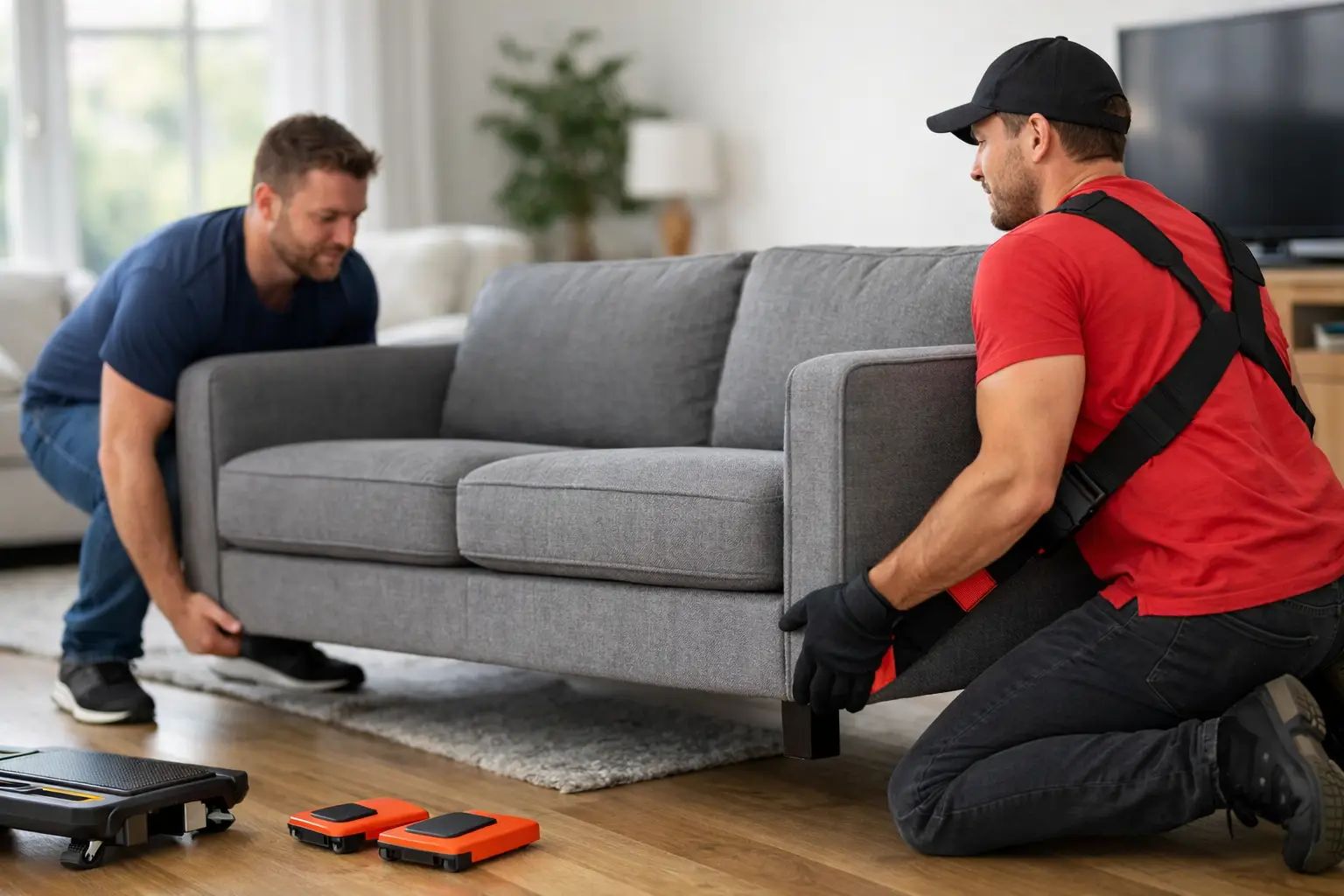
The right moving equipment can turn a difficult task into a manageable one. Furniture sliders work well on carpet, hardwood, laminate, and tile when the item can be pushed in a controlled direction. Place sliders under each corner, then move slowly while someone watches for snags, floor damage, or a slider slipping out of position.
A four-wheel furniture dolly is useful for boxy, stable items such as dressers, filing cabinets, and bookcases. A two-wheel hand truck can help with tall, narrow pieces, but the load must be secured and balanced. Moving straps can redistribute weight and improve grip, but they require practice and are not a substitute for a safe route or enough helpers.
Moving blankets protect wood finishes, upholstery, corners, and glass from scratches and impact. Wrap the furniture completely and secure blankets with stretch wrap or moving tape. Do not place tape directly on wood, leather, or delicate finishes, since adhesive can leave residue or pull up the finish.
Avoid improvising with office chairs, small wagons, or unstable household carts. These shortcuts often fail when weight shifts. Rental equipment can be helpful for a simple ground-floor move, but it depends on the item and the layout. Stairs, steep driveways, long carries, and large appliances create more risk than many people expect.
Moving Furniture Up or Down Stairs
Stairs deserve their own plan. Keep the strongest or most experienced person on the lower end of the item, where the weight is greater. Move one step at a time, pause at landings, and never let the person below lose sight of where they are stepping. The upper and lower carriers need to agree on the pace before starting.
Do not attempt to carry an oversized sofa, solid wood armoire, safe, or piano on stairs without experienced help and proper equipment. A stairway is not the place to test whether an item “might fit.” Professional movers can assess angles, padding needs, team size, and whether disassembly or specialized handling is required.
Load the Truck for Stability
Getting furniture to the truck is only half the job. It must be loaded in a way that prevents shifting during transport. Start with the heaviest pieces against the front wall of the truck, closest to the cab. Keep weight balanced from side to side and place heavier items low, not stacked on lighter boxes.
Upright furniture such as dressers and cabinets is often safer when loaded upright, unless its construction or the available space calls for another position. Mattresses can usually travel on their side, while glass tabletops and mirrors should be wrapped, marked as fragile, and secured vertically between padded items. Never stack heavy furniture on top of a mattress, sofa cushions, or fragile cartons.
Use ratchet straps or load bars to keep furniture from moving. Blankets should remain between wood pieces and between furniture and truck walls. Check the load again before closing the truck door. If you can see open gaps that allow items to slide, fill or secure them before driving.
Know When It Is Time to Call Movers
There is a difference between a challenging move and an unsafe one. Hiring professionals is often the better value when a move involves stairs, elevators, long carries, antique furniture, large sectionals, safes, pianos, commercial equipment, or a tight moving schedule. It also makes sense when you do not have enough reliable help or when an injury would create a bigger problem than the moving bill.
Licensed and insured movers bring trained crews, proper dollies, padding, straps, truck-loading experience, and a process built around protecting your home and belongings. For seniors, busy families, apartment residents, and business owners, that support can take a major physical and logistical burden off moving day.
Good Time Moving & Storage helps Tennessee customers handle heavy furniture with professional crews and careful planning, whether the move is across town, into storage, or to a new home farther away. A clear estimate and an honest conversation about access points, stairs, and special items help ensure the crew arrives prepared.
Heavy furniture does not reward speed or stubbornness. Give yourself room to plan, protect the surfaces that matter, and stop when the load or route no longer feels controlled. The best move is the one that gets every piece to its new place safely – and lets everyone feel good enough to enjoy it.