How to Pack Fragile Items for a Safe Move
A cracked television screen or a box of broken glassware can turn moving day into an expensive setback. Knowing how to pack fragile items before the truck arrives gives your belongings the protection they need and gives you one less thing to worry about during an already busy move.
The goal is not simply to add more bubble wrap. Safe packing comes down to using the right materials, wrapping each item correctly, choosing boxes that fit, and loading everything with care. Whether you are moving from a Nashville apartment, a Knoxville home, or an office across Tennessee, these steps can help your delicate belongings arrive in one piece.
Start With the Right Packing Materials
Fragile items need more than a few spare boxes from the garage. Used boxes can work for lightweight items if they are dry, clean, and structurally sound, but damaged or soft cardboard is not worth the risk for dishes, electronics, or heirlooms. New, sturdy boxes offer better protection for valuable breakables.
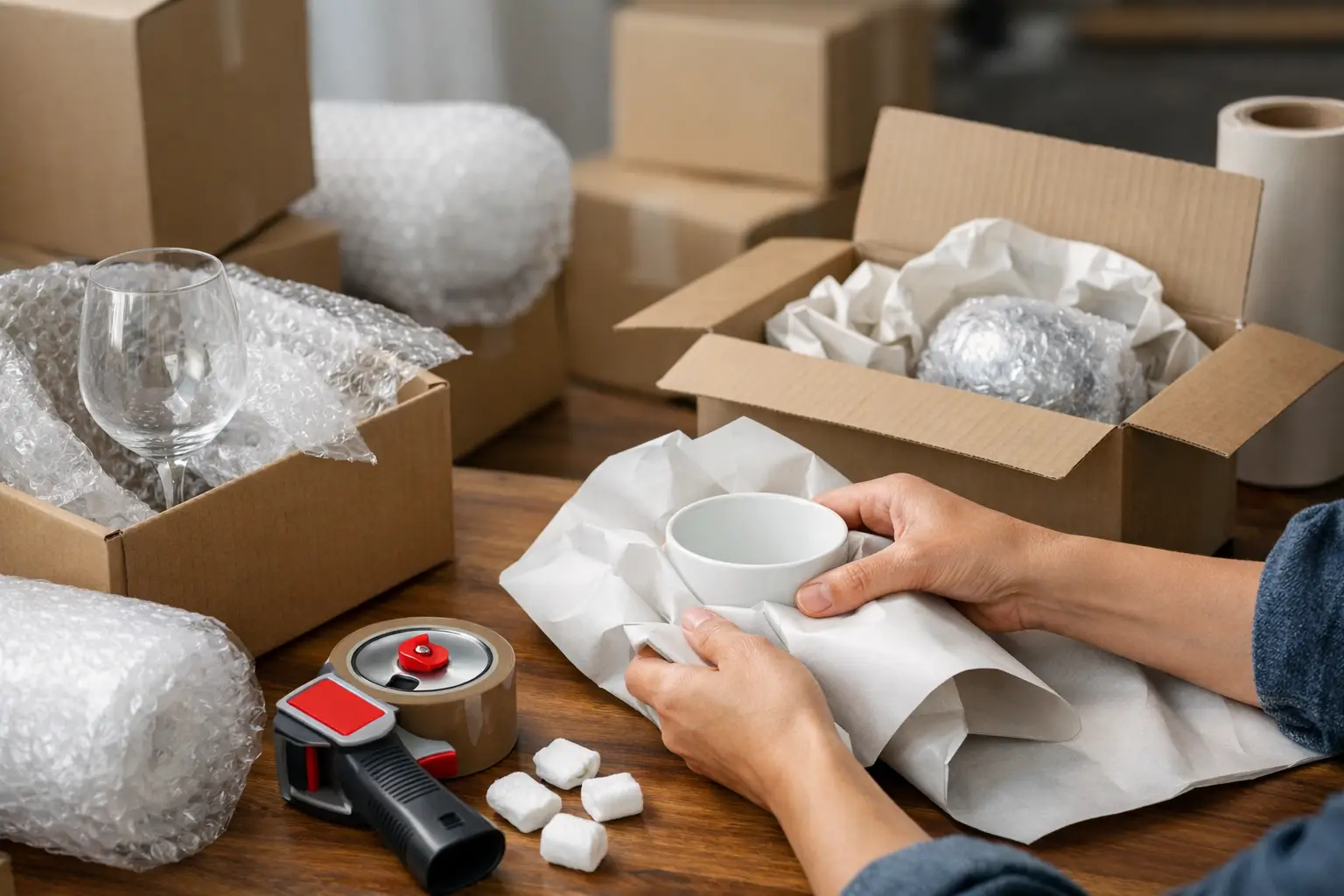
Gather packing paper, bubble wrap, packing tape, permanent markers, and labels before you begin. You will also want small and medium moving boxes, dish-pack boxes for glassware and plates, and cardboard dividers for stemware when possible. Blankets and furniture pads are especially useful for mirrors, framed art, and larger electronics.
Avoid packing fragile belongings in oversized boxes. A large box may seem efficient, but it leaves more room for items to shift and can become too heavy to carry safely. Smaller boxes are easier to control and less likely to be dropped or crushed during loading.
How to Pack Fragile Items Step by Step
Begin by creating a soft cushion at the bottom of every box. Crumpled packing paper works well because it fills empty space without adding much weight. A layer of bubble wrap can provide extra protection for especially delicate contents, but it should not be the only material supporting the box.
Wrap each item individually. Packing paper is often better than newspaper because it does not leave ink behind on dishes, glass, or light-colored decor. Place the item near one corner of a sheet, fold the paper over it, and roll it securely. Tuck the ends in as you roll so the item stays covered.
For delicate pieces, use a second layer of paper or bubble wrap after the first wrap. The key is to prevent direct contact between items. Glass against glass, ceramic against ceramic, or metal against a screen is where damage usually happens.
Place the heaviest wrapped items at the bottom of the box and lighter pieces on top. Keep the contents snug, but do not force items into place. Once the box is full, fill every open gap with crumpled paper, foam, or towels. When you gently shake the sealed box, you should not hear or feel movement inside.
Seal the bottom and top seams with several strips of strong packing tape. Label each side of the box with “FRAGILE” and identify the room where it belongs. A clear label helps movers and family members handle the box correctly without having to guess what is inside.
Pack Dishes, Glassware, and Stemware Carefully
Plates are strongest when packed vertically, like records, rather than stacked flat. Wrap each plate individually, then place the plates upright in a dish-pack box with padding on both sides. This positioning reduces pressure across the surface and helps prevent cracks.
Bowls, mugs, and glasses should be wrapped one at a time. For cups and bowls, place crumpled paper inside the hollow area first, then wrap the outside. This gives the item support from the inside and outside.
Stemware needs extra attention because the stem is usually the weakest point. Wrap the stem first, then wrap the bowl and base with additional paper. Glass dividers are helpful, but they are not a substitute for individual wrapping. A divider keeps glasses separated, while the wrapping absorbs impact.
Do not make a box of dishes too heavy. Even a well-packed box becomes vulnerable if someone has to strain to lift it. A manageable box is safer for the person carrying it and for the contents inside.
Protect Mirrors, Artwork, and Framed Photos
Mirrors and framed artwork should never be packed flat under other boxes. Use painter’s tape to make a large X across the glass. This does not prevent breakage, but it can help hold glass together if an impact occurs.
Cover the front and back with cardboard, then wrap the entire piece in bubble wrap or a moving blanket. Corner protectors add another layer of security, especially for large frames. Pack smaller framed pieces upright in a specialty picture box, with cardboard between each frame.
For large mirrors, oversized artwork, antiques, or sentimental pieces, professional packing may be the better choice. These items can be difficult to move safely because their size makes them awkward to carry, even when they are wrapped properly.
Handle Electronics With Care
Original manufacturer boxes are ideal for TVs, monitors, computers, and gaming systems because they are designed for the item’s size and shape. If you no longer have them, use a properly sized moving box and add generous padding around all sides.
Take photos of cable connections before unplugging equipment. Place cords, remotes, screws, and accessories in labeled bags, then keep those bags with the matching device. Do not tape bags directly to screens or finished surfaces, since adhesive can leave residue or cause damage.
Wrap screens in soft packing materials first, then add cardboard or a TV box for structure. Never place heavy objects on top of a television or monitor. Electronics should travel upright when possible, secured so they cannot tip or slide.
Avoid the Most Common Packing Mistakes
Many broken items are damaged because boxes are either underfilled or overfilled. An underfilled box allows belongings to shift with every turn and stop. An overfilled box creates pressure points and can split at the seams. The right box feels full and secure without bulging.
Another mistake is relying on towels, clothing, or blankets as the only protection. These household items are useful for filling gaps or adding a final layer around sturdy pieces, but they do not provide the consistent cushioning that packing paper and bubble wrap offer. Save them for secondary protection, not your main defense.
Finally, do not leave fragile boxes for the end of the loading process. They should be loaded upright, secured against a wall or stable furniture, and kept away from heavy items that could shift. A box marked “FRAGILE” still needs proper placement inside the moving truck.
When Professional Packing Is Worth It
Packing yourself can save money, especially for everyday dishes and smaller decor. But professional help is often worth considering for large TVs, fine art, antiques, chandeliers, pianos, valuable collections, and any item you would be devastated to replace. It is also a practical option when you are short on time or coordinating a move for a senior family member or a busy office.
A licensed and insured moving team can provide the right materials, proven packing methods, and careful loading practices. Good Time Moving & Storage helps Tennessee households and businesses protect delicate belongings with professional packing and moving support designed to make relocation less stressful.
Give yourself time to pack breakables slowly, one box at a time. Careful wrapping, tight packing, and clear labeling may take a little longer now, but they can save your favorite belongings from a preventable accident later.