
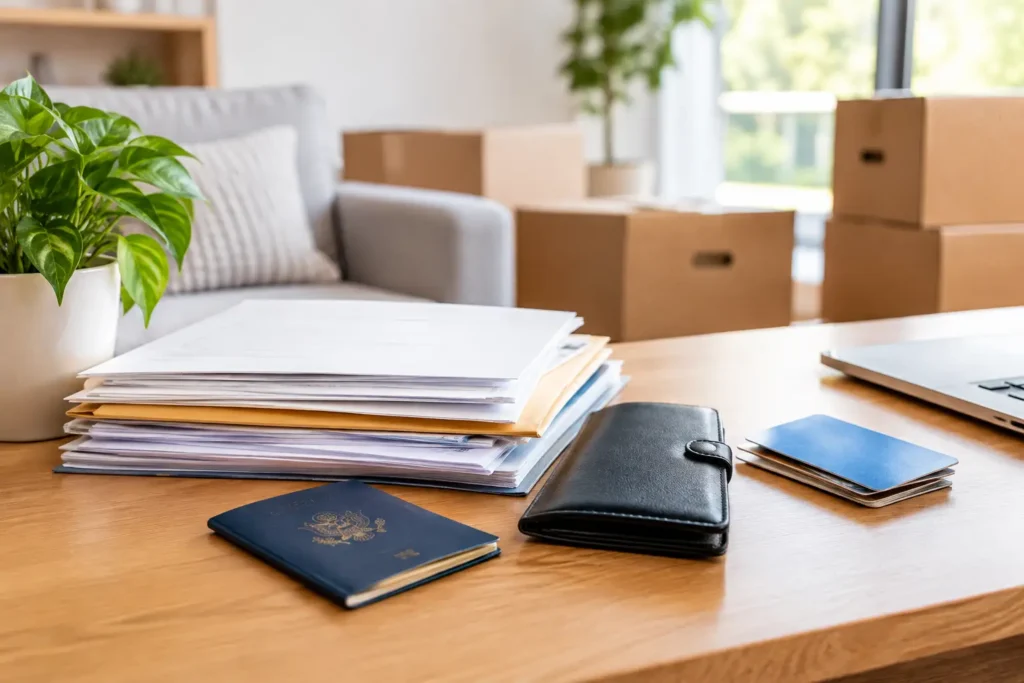
A missing charger is frustrating on moving day. A missing passport, closing document, or medical record can delay your plans long after the boxes are unloaded. The essential documents during a move deserve a plan of their own, separate from the packing paper, labeled cartons, and items going on the truck.
Whether you are moving across Nashville, relocating to Knoxville, or heading out of Tennessee, keep your most sensitive paperwork with you. Your movers can safely transport furniture, boxes, and carefully packed household belongings, but original documents should travel in your personal vehicle or carry-on bag whenever possible.
Essential Documents During a Move Checklist
Start by gathering documents several weeks before your move. Do not wait until the night before packing day, when papers tend to get mixed into desk drawers, file boxes, and stacks of mail.
Use a waterproof, zippered document organizer or locking file case. Keep it somewhere you can reach quickly, then take it with you when you leave your current home. If you are flying, place it in your carry-on rather than checked luggage.
The documents that belong in this folder usually include:
- Government-issued photo IDs, passports, Social Security cards, birth certificates, marriage certificates, and immigration records
- Home purchase paperwork, your lease, renter or homeowner insurance information, mortgage documents, and proof of address
- Moving estimate, inventory, bill of lading, payment records, and contact information for your moving company
- Medical records, prescription details, health insurance cards, vaccination records, and advance care documents
- Vehicle title and registration, auto insurance information, loan documents, and spare keys
- Banking details, tax records, employment documents, school records, and pet health paperwork
Not every household needs every item. A renter may not have closing paperwork, while a family with children will want school enrollment records close at hand. For a business move, add business licenses, tax documents, vendor contracts, employee records, and critical operational files.
Keep Originals With You, Not on the Truck
There is a practical reason to separate paperwork from the rest of your move. Even with a professional, licensed, and insured moving crew, access matters. You may need an ID to pick up keys, a lease to confirm move-in requirements, or a medication list before the moving truck arrives.
Original records are also difficult or time-consuming to replace. Packing them in a box marked “office” creates an unnecessary risk. That box could be loaded early, placed deep in storage, or delivered after your personal vehicle reaches the new home.
Create one clearly identified “do not pack” zone before movers arrive. A kitchen counter, locked closet, or designated table works well. Put your document case there along with your wallet, medications, house keys, phone charger, and any valuables you plan to carry yourself. Let every adult in the household know that these items do not go on the truck.
If you are using storage between homes, this step matters even more. Documents should never be packed into a storage unit unless they are duplicates you no longer need immediate access to. Heat, humidity, water damage, and simple retrieval hassles are all reasons to keep originals with you.
Documents for Your Home and Utilities
Your home paperwork can solve small problems quickly during a move. Keep copies of your signed lease or purchase agreement, move-in instructions, and contact information for your landlord, property manager, Realtor, or closing attorney. Apartment communities and condominium buildings may also require proof of insurance, elevator reservations, or parking approvals for the moving truck.
Bring records related to deposits and property condition. Before leaving, take dated photos of each room, appliances, walls, and outdoor areas. Save those photos to your phone and back them up digitally. For renters, this can help support a security deposit conversation later. For sellers, it creates a simple record of the home’s condition after your belongings are removed.
Your utility file should include account numbers and confirmation details for electricity, water, gas, internet, trash service, and security monitoring. Keep the scheduled shutoff date for your old address and activation date for your new one. It is much easier to find a confirmation number in your folder than to search through hundreds of emails while standing in a house without internet service.
Medical, School, and Pet Records Need Special Care
Medical documents are easy to overlook because they are not always stored in one place. Before moving, request records from doctors, dentists, specialists, and pharmacies if you are changing providers. Keep insurance cards, prescription information, eyeglass prescriptions, and a current list of medications in your moving-day folder.
For seniors, medical records and legal documents may be especially urgent. Include health care proxy forms, power of attorney paperwork, medication schedules, and emergency contact details. A senior move often involves several family members, care providers, or communities, so having one reliable folder reduces confusion when decisions need to be made quickly.
Families with children should collect report cards, immunization records, Individualized Education Program documents when applicable, and contact information for current schools. These records can make enrollment at a new school smoother, particularly when moving during the school year.
Do not forget pets. Bring veterinary records, vaccination certificates, microchip information, medication, and boarding or grooming contacts. If you are moving into a rental property, you may need proof of rabies vaccination or other pet records before move-in.
Moving Company Documents to Keep Within Reach
A dependable mover provides written information before the truck arrives. Keep your estimate, service agreement, inventory paperwork, and the mover’s direct contact information in your document folder. Review the details before moving day so you understand the pickup date, delivery expectations, services requested, and any items requiring special handling.
The bill of lading is one of the most important documents in a professional move. It serves as the contract and shipment record for your belongings. Read it before signing, confirm your addresses and contact details, and keep your copy until every item has been delivered and checked.
If you have questions about charges, access conditions, packing services, storage, or timing, ask before the crew begins work. Clear communication helps prevent surprises and protects your budget. A trustworthy moving company will explain the paperwork and provide straightforward answers.
Make Secure Digital Copies Before You Pack
Paper originals should stay with you, but digital backups add another layer of protection. Scan important records or take clear photos, then store them in an encrypted folder protected by a strong password. Avoid saving highly sensitive documents only on a phone that could be lost, damaged, or run out of battery during the move.
Be selective. A digital copy is useful for reference, but it should not replace an original passport, title, signed closing document, or other record that may be required in physical form. For documents containing account numbers or personal identification details, use secure storage and avoid emailing unprotected copies to yourself.
Before moving day, tell one trusted family member where your document folder is and how to access essential information in an emergency. This is particularly helpful for long-distance moves, senior relocations, and households coordinating several schedules at once.
A Simple Plan for Moving Day
The best system is the one you can follow when the house is busy. Pack your document organizer the evening before the move, not after the crew arrives. Place it in your personal bag, briefcase, or vehicle before loading starts.
As you leave, do a final check of filing cabinets, desk drawers, bedside tables, safes, and the kitchen junk drawer. Those are the places where passports, checkbooks, titles, and insurance cards often get left behind. If you shred unnecessary papers, do it before the move instead of transporting documents you no longer need.
Good Time Moving & Storage helps Tennessee families and businesses manage the heavy lifting with professional care. Keeping your essential paperwork close gives you one less thing to worry about, so you can focus on opening the door to your new space with confidence.