
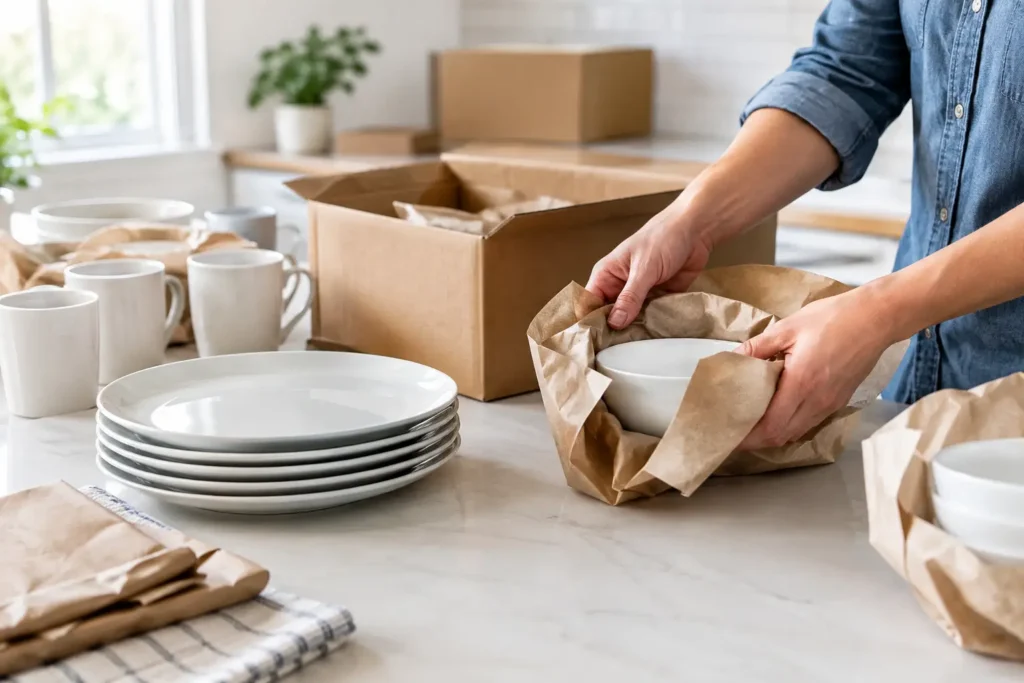
The kitchen is usually the last room people want to pack and the first room they need after a move. It has fragile glasses, heavy cookware, sharp utensils, and half-used pantry items all in one place. Knowing how to pack a kitchen in the right order protects your belongings, keeps boxes manageable, and makes settling into your new Tennessee home far less stressful.
The key is not using more boxes than necessary. It is using the right box for each item, cushioning fragile pieces correctly, and labeling every box so nothing important disappears into a stack of cardboard.
Start Packing the Kitchen Before Moving Week
A kitchen takes longer than it looks. For most households, plan to begin at least a week before moving day. If you have a large pantry, specialty cookware, or several sets of dishes, give yourself two weeks. Start with items you rarely use, then leave a small set of daily essentials until the end.
Before packing, clear a counter or kitchen table to use as a sorting station. Gather sturdy small and medium boxes, packing paper, tape, markers, dish-pack boxes, and a few resealable bags. Small boxes are especially useful for kitchen items because dishes, canned goods, and cookware become heavy quickly. A large box packed with plates may be difficult to lift safely and more likely to split.
Go cabinet by cabinet rather than pulling everything out at once. This keeps the room functional while you pack and prevents small items from getting mixed together. Set aside anything broken, expired, duplicated, or unlikely to be used in your next home. Moving is a good time to donate an extra toaster, unused mugs, or pantry food you will not finish.
Pack Plates, Bowls, and Serving Dishes on Edge
Plates are strongest when packed vertically, like records in a box, rather than laid flat in a heavy stack. Line the bottom of a sturdy box with several inches of crumpled packing paper. Wrap each plate individually, then place it on its edge. Add more crumpled paper between rows and around the sides so nothing shifts during loading.
Bowls can be wrapped one at a time and nested in small stacks if there is paper between each piece. For serving platters, casserole dishes, and other large items, use extra padding and place them upright whenever possible. Fill empty space at the top of the box with paper before sealing it. A box should feel full, but it should not bulge or strain when taped shut.
Dish towels can offer light protection around sturdy plastic containers or inside a box of pots and pans. They should not be the only protection for glass or fine china. Clean packing paper provides more reliable cushioning and leaves fewer surprises when you unpack.
Use Dish-Pack Boxes for Fragile Collections
If you own stoneware, crystal, heirloom dishes, or a full set of glassware, dish-pack boxes are worth the added cost. Their double-wall construction provides better protection than standard moving boxes. They are also a smart choice for long-distance moves or storage, where boxes may be handled more than once.
Mark these boxes clearly with “FRAGILE” and “THIS SIDE UP.” Labels do not replace proper packing, but they help movers identify boxes that need careful placement in the truck.
Wrap Glassware and Stemware Individually
Glassware breaks when it knocks against another item or moves inside the box. Wrap every glass separately with packing paper, starting at one corner and rolling the glass diagonally. Tuck the paper into the opening for added support, especially for thin drinking glasses.
Stemware needs extra attention. Wrap the stem first, then roll the bowl in paper, and use a second sheet if the glass is delicate. Place glasses upright in a divided box or in rows surrounded by crumpled paper. Never place heavy cookware, canned food, or appliances on top of a box containing glasses.
Wine bottles, olive oil, and other liquids should be sealed tightly, placed in resealable bags, and packed upright. If a bottle leaks, the bag helps contain the mess. It is often safer to use or give away open bottles before moving rather than transport them.
Pack Pots, Pans, and Small Appliances by Weight
Pots and pans are durable, but they can scratch each other and add weight fast. Nest them together with packing paper, towels, or paper towels between surfaces. Place lids upside down or wrap them separately, especially glass lids. Keep one or two everyday pans available until the night before your move.
Small appliances such as coffee makers, blenders, air fryers, and stand mixers need to be clean and completely dry before boxing. Remove detachable pieces, wrap them separately, and put cords in labeled bags. If you still have the original packaging, it can be useful, but only if the box is sturdy and fits properly.
For heavier appliances, use a small box with a reinforced bottom. A stand mixer, for example, may need its own box. Add padding below and around it so it cannot shift. Do not rely on a thin grocery box or an oversized carton just because it is available.
Handle Knives and Sharp Tools Safely
Kitchen knives should never be placed loose in a box. Wrap each knife in packing paper, then secure the bundle with tape around the paper only, not directly on the blade. You can also place wrapped knives in a knife block and wrap the entire block. Clearly label the box so no one reaches in without knowing what is inside.
For loose utensils, use small boxes or drawer organizers. Bundle forks, spoons, and serving utensils together, then fill any gaps with paper. Scissors, peelers, graters, and other sharp tools should be wrapped or covered before packing.
Decide What to Do With Pantry Food
Pantry items require practical judgment. Dry, sealed foods such as pasta, cereal, spices, and canned goods are usually fine to move locally. Pack them in small boxes and line the bottom with paper in case a jar or can shifts. Keep glass jars upright and separate them with packing paper.
Avoid moving opened food, perishable items, and anything that could spoil or attract pests. Plan meals around your refrigerator and freezer during the final week. On moving day, transport a small cooler of essentials yourself if the drive is short. For a long-distance move, it is generally best to use, donate, or discard refrigerated and frozen food.
Do not pack cleaning chemicals beside food, dishes, or linens. If you are taking them, ensure containers are closed, bagged, and stored upright in a separate box. Some moving companies may have restrictions on hazardous or flammable materials, so ask before moving items such as propane cylinders, aerosol cans, or certain solvents.
Create an Open-First Kitchen Box
The most useful box in your kitchen is the one you open first. Pack the basics you will need during your first day and morning in the new home: paper towels, dish soap, a sponge, hand soap, trash bags, a coffee maker or kettle, mugs, a few plates, basic utensils, and snacks. Add a phone charger and any necessary medications if they are likely to end up in the kitchen staging area.
Keep this box with you if possible, or label it clearly as “OPEN FIRST – KITCHEN.” It saves you from searching through ten boxes just to make coffee or clean up after takeout.
Label Kitchen Boxes for Faster Unpacking
Write more than “Kitchen” on each box. A label such as “Kitchen – Everyday Plates,” “Kitchen – Glasses – Fragile,” or “Kitchen – Pantry – Open First” tells you what is inside and where it belongs. Mark fragile boxes on at least two sides and the top.
If you are moving into a home with a different kitchen layout, avoid getting too specific about cabinet locations before you arrive. Label by category instead. That gives you flexibility to organize the new space without unpacking a box of baking supplies in every cabinet.
When Professional Packing Makes Sense
Packing your own kitchen can save money, but professional packing may be the better choice when time is tight, you have high-value dishware, or you are managing a larger move. It can also reduce the physical strain for seniors, busy families, and anyone preparing a home on a deadline.
Good Time Moving & Storage provides professional packing and moving support for households across Nashville, Knoxville, and surrounding Tennessee communities. A trained team can bring the right materials, protect fragile kitchen items, and load boxes securely so you can focus on the rest of your move.
A well-packed kitchen is less about perfection than preparation. Give fragile items room, keep boxes within a safe lifting weight, and leave yourself one clearly marked box for the first meal in your new home. That little bit of planning makes the first night feel much more like home.