
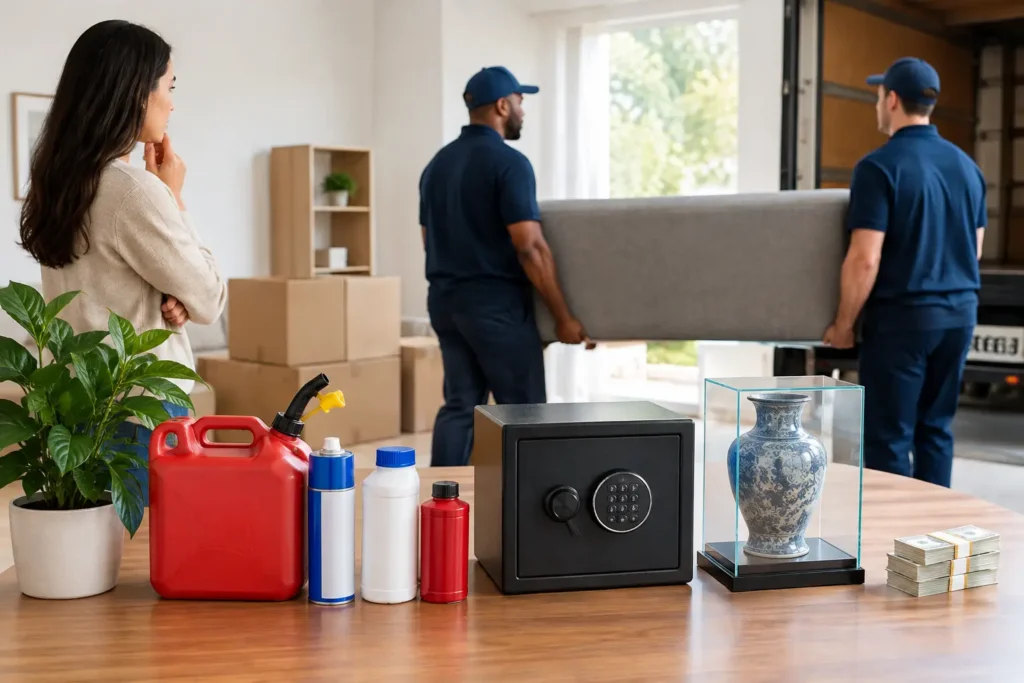
A moving crew can pack, lift, protect, and transport a remarkable amount, from heavy furniture and fragile dishes to office equipment and pianos. Still, knowing what movers cannot transport before moving day prevents last-minute surprises, protects your household, and helps your move stay on schedule.
Most restricted items are not about inconvenience. They create safety risks inside a moving truck, violate transportation regulations, or require you to keep personal control over them. A professional mover should explain these limits clearly so you can make a plan with confidence.
What Movers Cannot Transport and Why
Moving trucks carry tightly packed belongings over highways, through changing temperatures, and sometimes across long distances. An item that seems harmless in your garage or under a sink can leak, ignite, spoil, or damage other customers’ property during transport.
Licensed and insured movers also have to follow safety standards and carrier policies. The exact restrictions can vary based on whether you are moving locally in Nashville, relocating from Knoxville, or planning a longer move, but the categories below are widely restricted.
Hazardous and flammable materials
Movers generally cannot transport hazardous materials. These products can catch fire, release fumes, corrode surfaces, or create a health risk in an enclosed truck. Even a small leak can damage furniture, boxes, and the vehicle itself.
Common items to keep out of the moving truck include:
- Gasoline, propane tanks, lighter fluid, and charcoal
- Paint, paint thinner, stain, solvents, and varnish
- Fireworks, ammunition, explosives, and flares
- Pool chemicals, pesticides, fertilizers, and harsh cleaning chemicals
- Aerosol cans, nail polish remover, and some batteries
Do not assume an item is acceptable because its lid is closed or it is nearly empty. A hot truck, shifting boxes, or pressure changes can turn a sealed container into a problem. Use up safe household products when possible, give unopened items to a neighbor, or ask your local waste facility about proper disposal.
Fuel-powered equipment
Lawn mowers, leaf blowers, chainsaws, motorcycles, and generators deserve special attention. Many movers can transport certain equipment only after the fuel and oil have been drained and the equipment has been prepared correctly. Other items may require separate arrangements.
Ask before moving day rather than loading a mower into the garage section of your home and hoping it can go. Preparation requirements depend on the equipment, its condition, and the type of move. This is one area where a quick conversation can prevent delays for the entire crew.
Perishable food and open items
Perishable foods are usually a poor fit for a moving truck, especially during a long-distance move or when storage is involved. Refrigerated food, frozen meals, open containers, and anything likely to spoil can create odors and attract pests. Movers may also decline food that could leak or crush inside a box.
For a local Tennessee move, you may be able to carry a small cooler in your personal vehicle. For pantry goods, unopened, nonperishable items are often easier to move, but packing them too heavily can make boxes unsafe to lift. Sort food early, use what you can, and donate unopened items that will not make sense to bring.
Plants and pets
Your plants and pets need a more controlled environment than a moving truck can provide. Trucks can become very hot or cold, may not have stable airflow, and are not designed for living cargo. For that reason, movers generally cannot transport pets or plants.
Keep pets with you in a secure carrier or arrange care for moving day. Plants are best transported in your personal vehicle, with pots stabilized and soil covered to reduce spills. If you are crossing state lines, check whether your destination has restrictions on certain plants, soil, or agricultural materials.
Cash, valuables, and personal records
Movers may handle valuable belongings carefully, but there are items you should always keep under your own control. Cash, jewelry, heirlooms, prescription medication, passports, legal paperwork, financial records, keys, and irreplaceable photos belong in a personal bag, lockbox, or vehicle you control.
This is less about distrust and more about access and risk. You may need medication, identification, closing documents, or spare keys before the truck arrives at your new home. Keeping them close also avoids the stress of searching through dozens of boxes after delivery.
Special Items That Need Advance Approval
Some belongings are not automatically prohibited, but they should never be treated as ordinary boxes. Firearms, ammunition, large safes, medical equipment, oversized aquariums, and specialty electronics may require specific preparation or may be subject to company policy.
Firearms are a clear example. Laws and handling requirements can differ by location, and ammunition is commonly restricted because it is hazardous. If you own firearms, make a legal, secure transportation plan well before moving day. Do not pack them inside a random household box.
Large aquariums and water features need to be completely emptied, cleaned, and dried. Water adds significant weight, and even a small amount can leak into a truck. Refrigerators and freezers should also be emptied, defrosted, cleaned, and dried ahead of time to prevent mold, odors, and water damage.
For expensive art, antiques, large mirrors, pianos, or delicate electronics, the issue is usually not whether movers can transport them. It is whether they need specialized packing, crating, disassembly, or added protection. Mention these items during your estimate so the crew arrives with the right equipment and enough time to handle them properly.
Storage Has Its Own Restrictions
If your move includes storage, expect an additional level of care. Secure storage is designed for furniture, boxes, and approved household goods, not for food, fuel, chemicals, or living things. Perishable goods can attract pests, while flammable products can put an entire facility at risk.
Before placing items into storage, clean appliances, empty trash cans, remove food from drawers, and check every box for liquids. A good rule is simple: if an item would be unsafe or unpleasant to leave in a closed unit for several weeks, it should not go into storage.
How to Prepare Before Your Movers Arrive
Start your restricted-item check a week or two before the move, not the night before. Walk through your garage, shed, basement, kitchen, bathrooms, and laundry room. These spaces hold most of the products that people forget about until the crew is at the door.
Create a separate “do not load” area for anything you will carry, dispose of, donate, or handle through another service. Clearly label it so it does not get mixed in with boxes intended for the truck. If you are packing yourself, avoid putting liquids, medications, candles, batteries, or cleaning products into boxes without confirming they are acceptable.
Then share unusual items with your moving coordinator. An accurate inventory leads to a more accurate quote, the right equipment, and fewer surprises on moving day. It also gives you time to ask about disassembly, packing services, elevator access, stairs, parking, and storage needs.
A Safer Move Starts With a Clear Plan
A dependable moving company will be upfront about what it can safely carry and what needs another plan. At Good Time Moving & Storage, clear communication is part of creating an affordable, stress-free move for Tennessee households and businesses.
Keep restricted items separate, ask questions early, and let your moving team know about anything unusual. That small amount of preparation helps protect your belongings, your schedule, and everyone involved in getting you settled into your new space.