
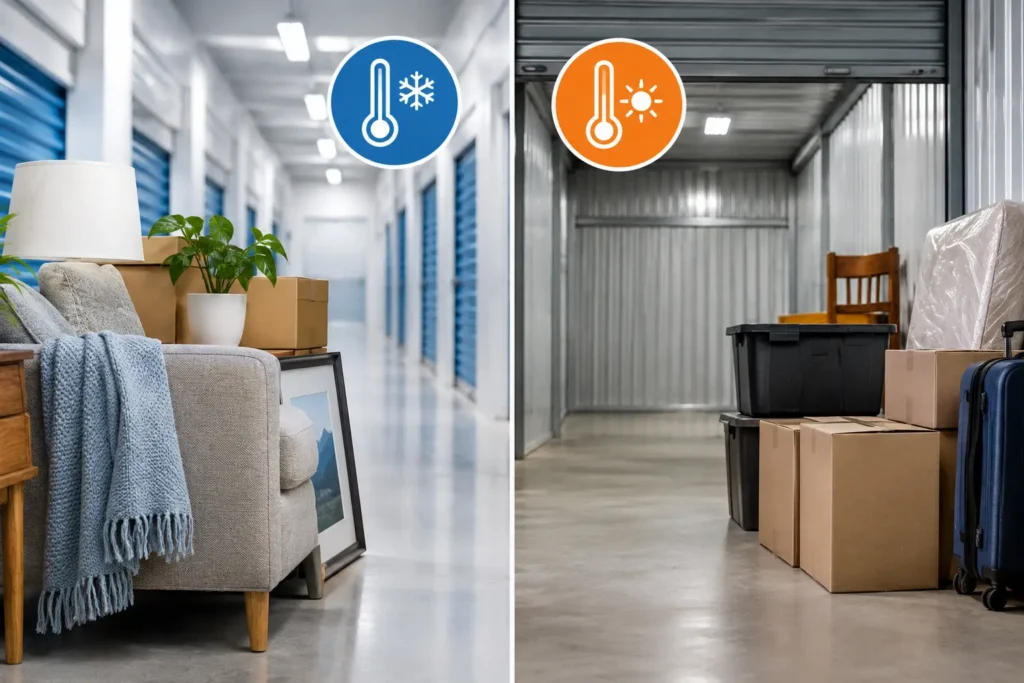
A storage unit can look like a simple square-footage decision until summer heat, sticky humidity, or a long delay between homes puts your belongings at risk. When comparing climate controlled versus regular storage, the right choice comes down to what you are storing, how long it will stay there, and how much protection you need for the items you cannot easily replace.
For many Tennessee households, storage is part of a larger move. You may need a few weeks between closing dates, a secure place for furniture during a renovation, or room to sort belongings before downsizing. Regular storage can be a practical, affordable fit for many items. Climate-controlled storage costs more, but it can prevent expensive damage to sensitive belongings when temperatures and humidity swing.
Climate Controlled Versus Regular Storage: The Difference
Regular storage units are generally enclosed spaces without active temperature or humidity management. They protect belongings from rain, wind, direct sun, and unauthorized access, but the interior temperature can rise or fall with the weather outside. In Tennessee, that may mean hot, humid summers and chilly winter stretches.
Climate-controlled storage maintains a more stable interior temperature, often through heating and air conditioning. Many climate-controlled facilities also manage humidity to some degree, though the level of humidity control varies by location. If humidity protection is a deciding factor, ask specifically how the facility handles moisture rather than assuming every indoor unit offers the same conditions.
The practical difference is consistency. Wood, paper, fabric, electronics, and certain finishes tend to fare better when they are not repeatedly exposed to heat, cold, and moisture in the air. Regular storage remains a sensible option for durable items that can tolerate normal seasonal changes.
When Climate-Controlled Storage Is Worth It
Climate-controlled storage is usually the better investment when you are storing valuables, delicate materials, or belongings with sentimental value. The longer the storage period, the stronger the case becomes. A few days of storage during a local move is different from keeping a household in storage for six months.
Choose climate control for items such as solid-wood furniture, antiques, family heirlooms, artwork, photographs, books, records, important files, musical instruments, electronics, and upholstered furniture. These belongings can react poorly to moisture or extreme heat. Wood may expand, contract, warp, or crack. Paper can yellow, curl, or develop mildew. Leather and fabric may absorb odors or become a target for mold when moisture is present.
Electronics deserve special consideration. TVs, computers, speakers, gaming systems, and office equipment contain components that do not benefit from high heat or damp conditions. If a commercial move includes computers, archived documents, or specialized equipment, a climate-controlled option can reduce risk during a longer transition.
For senior moves and downsizing projects, climate control can also provide extra peace of mind. Families often place keepsakes, photo albums, inherited furniture, and other irreplaceable items in storage while decisions are being made. Saving a little on monthly rent may not feel worthwhile if a treasured item is damaged.
When Regular Storage Makes Sense
Regular storage is not automatically the lesser option. It can be a cost-effective choice for durable, weather-tolerant items, especially when storage is short term and packing is handled correctly.
Outdoor furniture, lawn equipment, metal shelving, tools, patio items, plastic bins, and certain garage supplies often do well in regular storage. A regular unit may also work for mattresses, sofas, and household furniture when the unit is clean, dry, well-maintained, and the storage period is limited. The key is to avoid treating a regular unit like a catch-all space for items that need different conditions.
Budget matters during a move. If you are storing mostly durable items for a month while waiting for your new home to be ready, regular storage may be the smart choice. Put the more sensitive belongings in climate-controlled storage or keep them with you, rather than paying for a larger climate-controlled unit than you truly need.
Tennessee Heat and Humidity Change the Decision
Nashville, Knoxville, and surrounding Tennessee communities experience weather that can be hard on stored belongings. Summer temperatures can climb quickly, and humidity is often the bigger concern. Moisture does not need a flood or a visible leak to cause trouble. Humid air can contribute to musty odors, mildew, and damage over time, particularly in packed spaces with limited airflow.
That does not mean every item must go into a climate-controlled unit. It means you should match the unit to the contents. A set of garden tools and a plastic patio set have very different storage needs than a walnut dining table, boxed business records, or a piano.
If you are storing a piano, antique furniture, or other high-value specialty items, talk with your moving team before choosing a unit. These pieces require careful handling during loading and delivery as well as a storage environment that supports their condition.
Compare the Total Cost, Not Just Monthly Rent
A climate-controlled unit generally has a higher monthly price than a regular unit. That difference can be worth it, but only if it protects items that would be costly or impossible to replace. Think beyond the storage rate and consider the potential cost of warped furniture, mold-affected upholstery, damaged documents, or failed electronics.
There are also practical costs to consider. Climate-controlled units are often located indoors, which can offer a cleaner environment and more comfortable access when you need to retrieve something. Regular drive-up units may be more convenient for loading heavy boxes, tools, or bulky furniture directly from a truck. Convenience, access hours, security features, and unit size can matter as much as temperature control.
Before reserving a unit, ask whether the quoted rate includes required fees, insurance options, lock requirements, and any move-in specials that later expire. Clear pricing helps you plan with confidence and avoid surprises during an already busy move.
Pack for Storage, Whatever Unit You Choose
The right unit is only part of protecting your belongings. Good packing reduces the chance of damage in both climate-controlled and regular storage.
- Use sturdy boxes of similar sizes so they stack securely and leave stable walkways.
- Wrap furniture with moving blankets or breathable protective materials. Avoid trapping moisture against wood or leather with tight plastic wrap for long periods.
- Elevate boxes and furniture off the floor with pallets or shelving when permitted.
- Clean and fully dry appliances, lawn equipment, and furniture before storing them.
- Label every box by room and contents, then keep a simple inventory of valuable or essential items.
Do not store food, perishable items, hazardous chemicals, gasoline, propane tanks, or anything prohibited by the facility. These items can create safety issues and attract pests. For appliances, leave doors slightly open after cleaning and drying them to reduce the chance of trapped odors or mildew.
Questions to Ask Before You Store
A quick conversation can tell you far more than a unit listing. Ask whether the facility is truly climate controlled or simply indoor, how it handles humidity, what security measures are in place, and whether the unit is monitored or accessible during the hours you need.
You should also ask about cleanliness, pest-control practices, and whether staff can explain the best access route for your moving truck. If you are coordinating storage with a residential or commercial relocation, confirm who is responsible for packing, loading, inventory, and delivery when you are ready to retrieve your items.
Good Time Moving & Storage helps Tennessee customers coordinate moving and storage with professional handling from pickup through delivery. Working with one dependable team can simplify the handoff, reduce unnecessary handling, and keep your move organized when timing changes.
The best storage choice is the one that protects what matters without stretching your budget for features you do not need. Start by sorting your belongings into durable, sensitive, and irreplaceable categories. Once you see what is truly going into storage, the right level of protection becomes much easier to choose.