How to Prepare for Movers Without the Rush
A moving crew can do a great deal in a few hours, but the day goes much better when the home is ready for them. Knowing how to prepare for movers means more than filling boxes. It means making decisions early, creating safe access, and giving the crew a clear path to protect your belongings and keep the move on schedule.
Whether you are moving from a Nashville apartment, a Knoxville family home, or a Tennessee office, a little preparation prevents the problems that cause most moving-day delays: loose items, blocked hallways, missing keys, parking issues, and last-minute surprises. Here is a practical plan for getting ready.
Start With a Plan Before You Pack
Begin by confirming the basics with your moving company. Verify your move date, arrival window, both addresses, and the services included in your estimate. If you need packing help, storage, furniture disassembly, or specialty handling for a piano, oversized furniture, or delicate antiques, make sure the crew knows well before moving day.
Walk through every room and decide what is coming with you. Moving items you no longer use adds cost, time, and clutter to the new home. Sell, donate, recycle, or dispose of unwanted belongings early, especially bulky furniture and old appliances. In many cases, reducing the load is more affordable than paying to transport things you do not want.
This is also the time to tell your movers about conditions that can affect the job. Share details about stairs, elevators, narrow driveways, long carries from the door to the truck, building move-in rules, and difficult parking. Apartment and condo moves often require elevator reservations or a certificate of insurance, while some neighborhoods have limited truck access. Clear information helps avoid delays and unexpected complications.
How to Prepare for Movers by Packing Smart
If you are packing yourself, aim to have nearly everything boxed before the movers arrive. Professional movers can pack loose items for you if that service is arranged, but a crew should not have to wait while you sort closets or search for boxes. A home that looks mostly packed is not always ready. Open drawers, loose wall décor, bathroom items, and items stored under beds are easy to overlook.
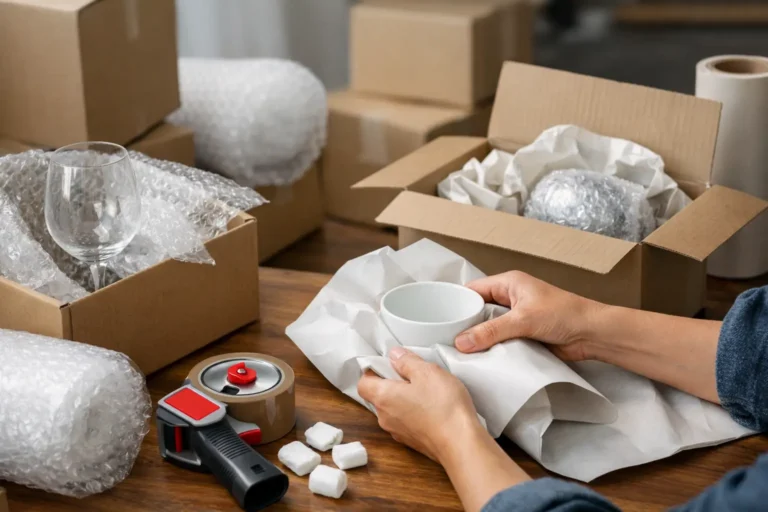
Use sturdy boxes in manageable sizes. Heavy books, tools, and canned goods belong in small boxes. Lighter belongings such as linens, pillows, and clothes can go into larger boxes. Fill empty spaces with packing paper or other cushioning so the contents do not shift during transport, then tape each box securely.
Label boxes on at least two sides with the destination room and a simple description. “Kitchen – everyday dishes” is more useful than “miscellaneous.” Mark fragile boxes clearly, but do not rely on labels alone to protect breakables. Wrap glassware, dishes, and framed pieces individually with proper packing materials.
Avoid using trash bags for most household goods. They can tear, conceal what is inside, and be mistaken for actual trash. Clear bags can work for soft items such as bedding or hanging clothes, but boxes remain the safer choice for the majority of a move.
Pack an essentials bag for the first night
Keep a separate bag, suitcase, or clearly marked box with the things you will need immediately after arrival. Include medications, chargers, important documents, basic toiletries, a change of clothes, pet supplies, children’s comfort items, and any items needed to work the next day.
For a local move, you may keep this bag with you in your vehicle. For a longer move, it is especially helpful to separate the items you cannot afford to have buried in a truck or storage unit.
Separate What Movers Should Not Transport
Movers are trained to handle furniture, boxes, and many specialty items safely. However, some belongings should travel with you because of their value, sensitivity, or safety restrictions. Keep personal records, passports, jewelry, cash, prescription medication, sentimental photographs, and small electronics under your own control.
Do not pack hazardous or flammable materials in the moving truck. Gasoline, propane tanks, fireworks, aerosol cans, chemicals, paint thinners, pool chemicals, and certain batteries may be restricted. Check with your moving company if you are unsure about a specific item. It is better to ask in advance than to discover on moving day that an item cannot be loaded.
Take a few minutes to prepare appliances and equipment as well. Empty and defrost refrigerators at least 24 hours ahead, drain hoses where needed, and disconnect appliances according to manufacturer guidance. Empty fuel from lawn equipment if required. For computers, televisions, and other electronics, take photos of cable connections before unplugging them. Those photos can save time when you set up the new space.
Make the Home Easy and Safe to Move Through
The crew needs safe, unobstructed routes from each room to the truck. Clear hallways, stairs, entryways, and walkways before arrival. Remove rugs that could slip, low-hanging décor, and obstacles such as shoes, toys, pet bowls, and loose cords. If a piece of furniture is staying behind, mark it clearly or move it into a designated room so there is no confusion.
Reserve parking as close to the entrance as possible. If a truck needs a permit, loading zone access, or approval from a property manager, arrange it ahead of time. For apartment moves, measure elevator access and confirm the building’s rules for moving blankets, floor protection, and service entrances.
Protecting the home matters too. Point out fragile flooring, recently painted walls, tight corners, and any areas that need extra care. Reputable, licensed and insured movers will use appropriate protection and handling methods, but advance notice helps the team plan for the layout.
If children or pets will be home, consider arranging care for them during loading. Moving day can be loud, busy, and stressful. Keeping them away from open doors, stairs, and heavy furniture creates a safer environment for everyone.
Prepare Furniture and Special Items
You do not need to dismantle every piece of furniture yourself. In fact, doing so without the right tools can lead to lost hardware or damage. Confirm what your movers will disassemble and reassemble, then remove only personal items from drawers, shelves, and cabinets unless your mover gives different instructions.
For beds, desks, shelving units, and other furniture that needs to come apart, set aside any manuals and specialty hardware. If you disassemble something before the crew arrives, place screws and small parts in a labeled bag taped securely to the furniture or keep them in your essentials box.
Let the movers know about items that need specialized handling. Pianos, safes, large appliances, glass tabletops, antiques, and heavy exercise equipment may require additional equipment, extra crew members, or a different moving plan. This is not an area to leave until the truck is at the curb.
Use a Simple Moving-Day Checklist
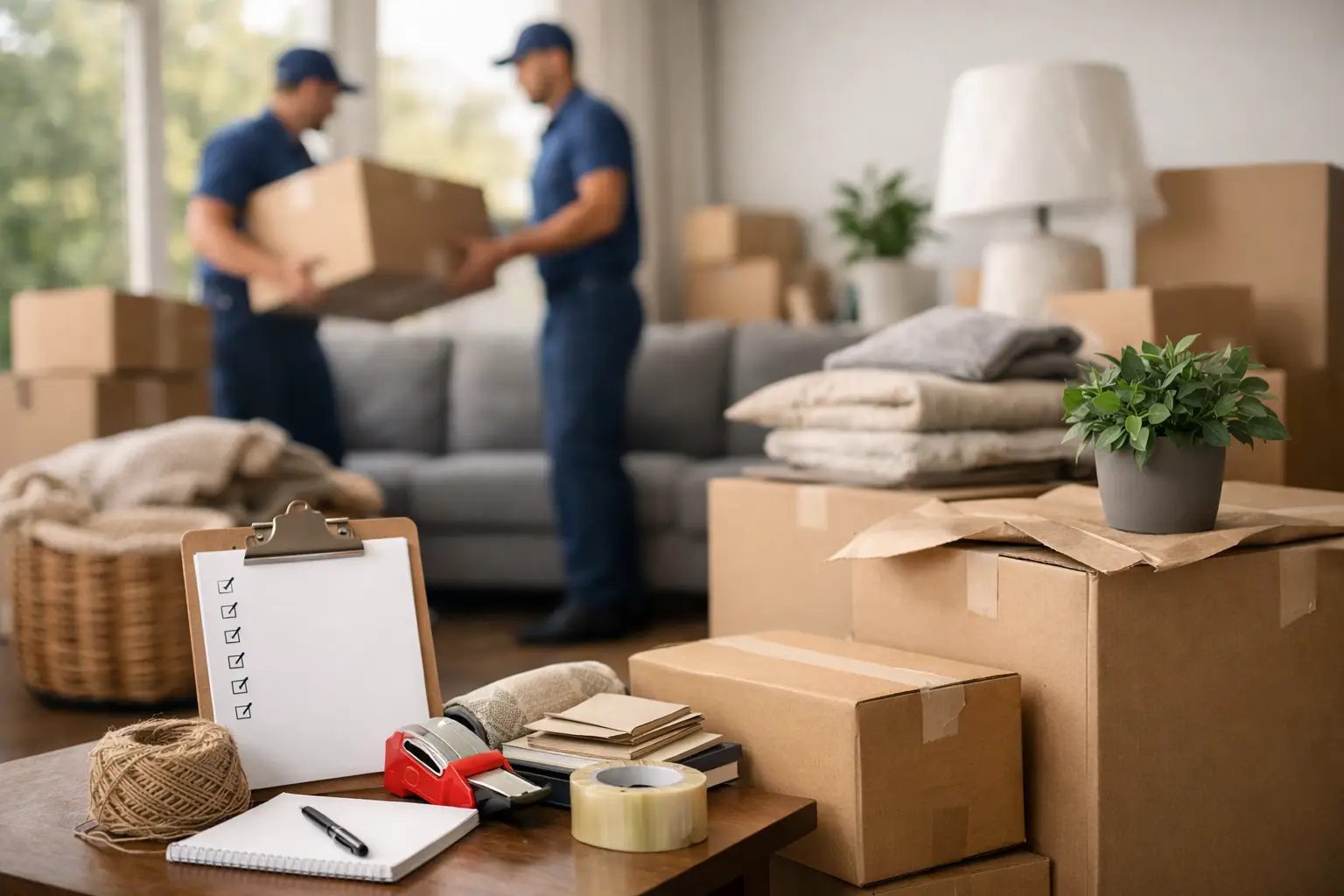
The morning of the move, do one final walk-through before the crew begins loading. Make sure boxes are sealed and labeled, drawers are emptied as requested, and the pathways are clear. Keep your phone charged and stay available for questions about what goes where.
Before the truck leaves, check closets, cabinets, the attic, garage, outdoor storage, and behind doors. These are the places commonly missed when the home is emptying quickly. Take photos of the condition of your home if you are a renter or if that documentation will help with a sale or property handoff.
At the new location, direct movers to the correct rooms as items come in. Room labels make this much easier. There is no need to unpack everything immediately, but putting boxes in the right space saves repeated lifting later. Before the crew leaves, inspect large furniture and confirm that all items have been delivered.
When Full-Service Help Makes Sense
Packing yourself can lower the cost of a move, but it takes time and attention to detail. Full-service packing is often a smart choice for busy households, seniors, office moves, long-distance relocations, or homes with fragile collections. The trade-off is a higher upfront cost, but professional packing can reduce damage risk and free you to focus on utilities, address changes, and the details of settling in.
Good Time Moving & Storage helps Tennessee households and businesses coordinate local and long-distance moves with professional packing, secure storage, and careful handling for specialty items. A clear estimate and an honest discussion of your needs can help you choose the right level of support without paying for services you do not need.
Moving day does not have to feel chaotic. Give yourself time to pack, communicate the details that affect access and handling, and keep your essentials close. When the crew arrives to an organized home, they can spend their time doing what you hired them to do: moving your belongings carefully and getting you closer to settled.